Good Writing: An Evening with Anne Lamott & Neal Allen

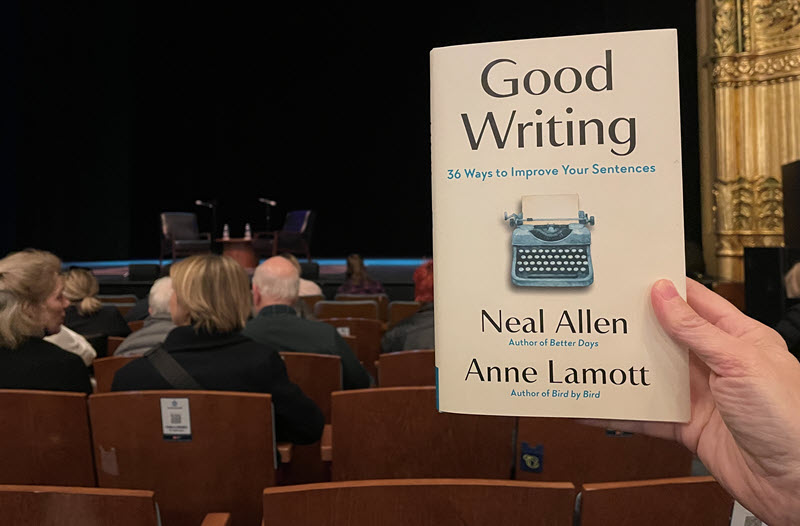
As a 20th wedding anniversary gift, my wife Kate got us tickets to see Anne Lamott and Neal Allen talk about Good Writing: 36 Ways to Improve Your Sentences, which they wrote together. Since Kate and I have published seven books between us, and have aspirations to write more and eventually co-author a novel, we were curious about them as a writing duo. I was also curious about their thoughts on the issues of the day, and since the audience could submit questions, I asked them and was fortunate enough to have them pick my questions.

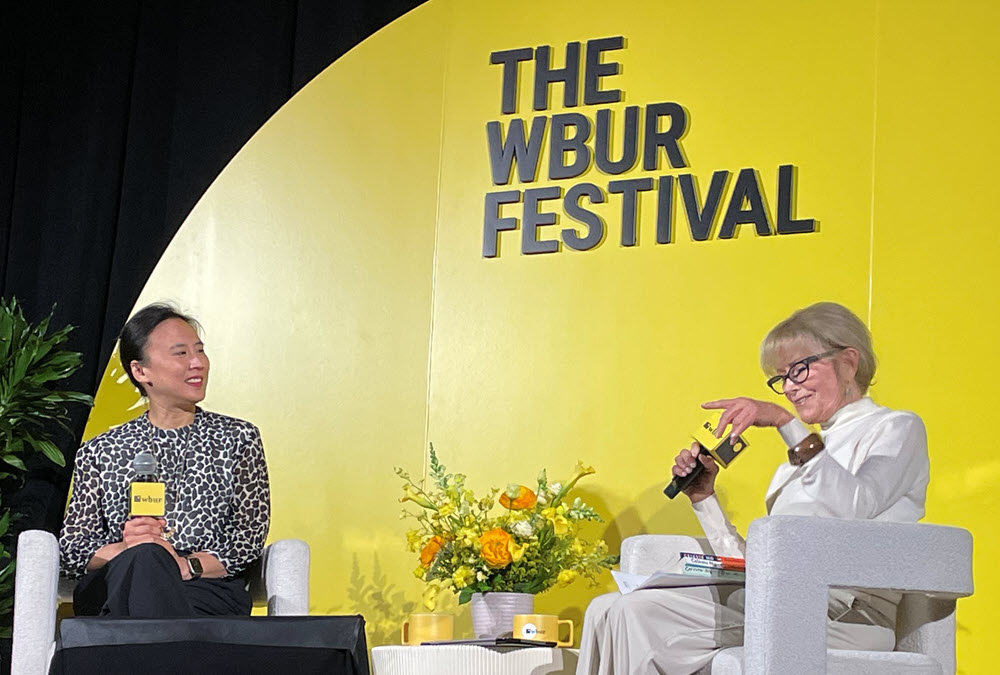
Moments before Anne Lamott and Neal Allen took the stage to discuss Good Writing and answer audience questions

Social media & book reviews

In response to my question about how social media has changed in the publishing industry, Lamott said, “There are no more book reviews in the world. It’s all social media.”

She added that Good Writing was her 21st book and her first launched with no book reviews. “You have to create a platform.”

That’s sobering advice for every writer who hates social media and platform building.

The role of artificial intelligence

Along with many others, I asked about their views on artificial intelligence. Neither of them was interested in using it for writing, with Lamott joking, “I don’t know how to operate a toaster.” Allen said he wasn’t tempted to use AI for writing because the writing is the part he enjoys. Later, he would say, “It’s only through writing the book that I discover what I don’t know.”

That said, both Allen and Lamott were in awe of AI. It has not only read every novel, said Allen, but all literary criticism. “AI is going to be the authority.”

At times, Lamott sounded downright fatalistic about AI. A Sunday School teacher until recently, she said she asked ChatGPT to write a Palm Sunday talk “in the style of Anne Lamott” and confessed that it was “exquisite.” She concluded, “There’s no reason for me. It can write me.” That statement alarmed the audience.

“I think there will be guilds like there were in the Middle Ages,” added Lamott, who’s concerned about the impact AI will have on her son and grandson. “There will be people huddled together escaping AI.”

The purpose of writing

While that sounds dystopian, both Lamott and Allen see writing as a personal endeavor first, an interpersonal endeavor second, and a community endeavor last. Lamott said the fulfillment is in the writing, not the publishing. 

“The respect you’re looking for is only from within,” she said, “and that’s terrible news for people who just got an agent.”

In arguing that it’s about the writing, Lamott went so far as to say, “I’m not going to be remembered.” That also shocked the audience. But she backed it up by rattling off a list of great authors she loves who aren’t read anymore.

The option of self-publishing

However, it was difficult to square those views with others they expressed, particularly when I asked about self-publishing.  

“If I was younger, I’d really consider self-publishing,” said Lamott, acknowledging that getting an agent and a publisher is “so hard.”

They shared that Allen self-published a book he wrote that didn’t sel. It went on to sell 3,000 copies, which the audience applauded. Those sales figures put his book solidly among the top 10% of all published books, which is applaud-worthy indeed, even if they aren’t blockbuster sales numbers.

However, he said his agent is currently trying to sell a novel of his, and that he wouldn’t self-publish this one if it didn’t sell. In another surprising turn, he added, “I don’t think the world needs my novel.”

Given his statements about writing for the sake of self-discovery and self-fulfillment, perhaps that makes sense. But it begs the question: If publishing doesn’t matter and the world doesn’t need his novel, then why is he having his agent try to sell it?

For my part, I’m going to pretend he didn’t say that and focus on something else he said instead: “Everyone is yearning for intimacy with the world.”

That rings true to my ears. And that’s why I think self-publishing is such a game-changer. It gives everyone a chance to be heard and to affect others—however fleetingly. 


Related posts:

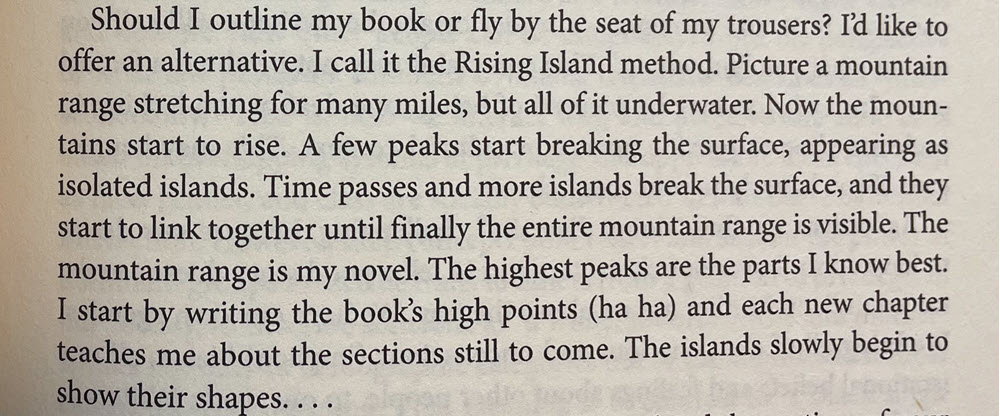
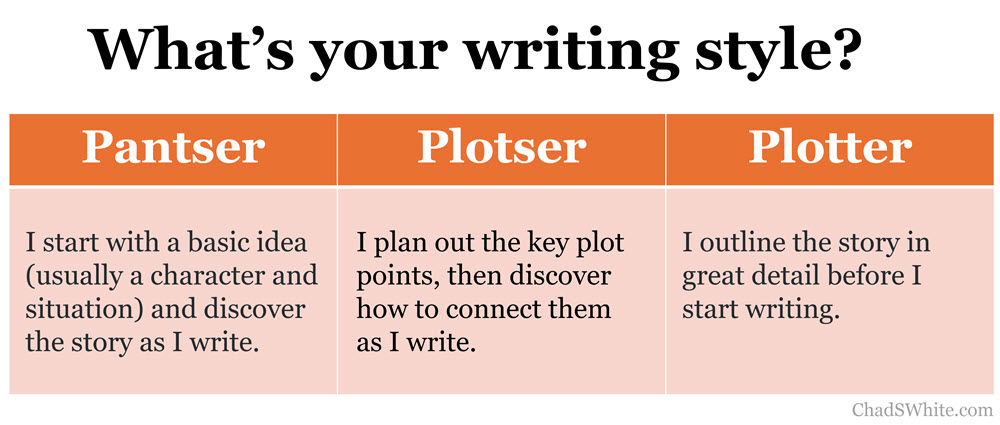
Building up to a book

Why are we trying to discourage aspiring novelists from publishing?

Where to draw the line with genAI


To receive future posts for free or to become a Patron and support my dystopian sci-fi novel and get special thank-you goodies upon its publication… 

Grammarly’s Expert Review debacle

I’ve never used Grammarly, in large part because it seemed largely a way to police wordcount progress (that’s extra stress I don’t need) and, more recently, was too close to AI (which I don’t want to be a part of my novel-writing process). The recent scandal around their Expert Review AI agent validates my feelings.

Grammarly launched Expert Review last August, with the AI agent “designed to help users discover influential perspectives and scholarship relevant to their work,” according to Shishir Mehrotra, the CEO of Superhuman, which operates Grammarly. However, in an announcement on LinkedIn this month, he said they have disabled the feature while they reimagine it “to make it more useful for users, while giving experts real control over how they want to be represented — or not represented at all.”

That last bit is a soft acknowledgment of what they’d done wrong with Expert Review. Ann Handley, the author of Everybody Writes, casts a bright light on their mistakes:

Read Ann Handley’s comment on LinkedIn

I couldn’t agree more with Ann Handley’s comment. Not to be overly dramatic, but things like Expert Review are exactly why so many creators, artists, and writers see AI as a threat—not just to their livelihoods and reputations, but to their passions. AI can be used responsibly. All technology providers—but especially those who want to be seen as allies to creatives—have to try harder.


Related posts:

Where to draw the line with genAI

The Age of De-Skilling: Who do you want to be?


To receive future posts for free or to become a Patron and support my dystopian sci-fi novel and get special thank-you goodies upon its publication… 

How to make your book longer

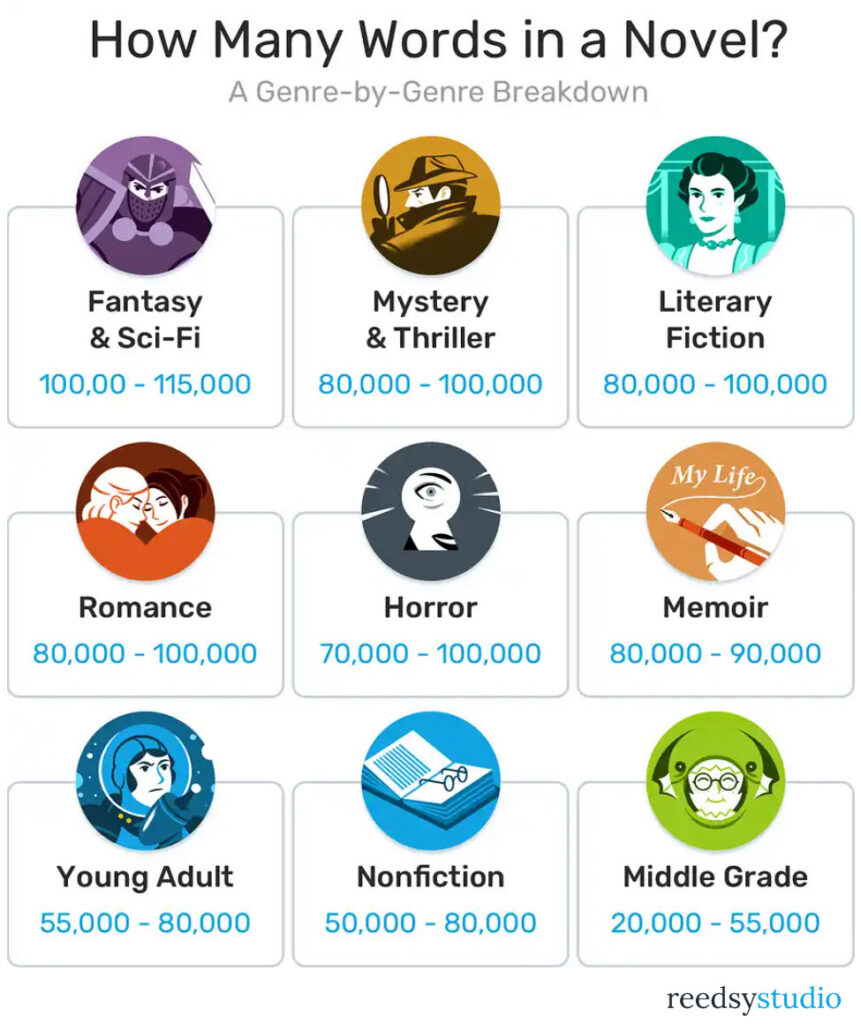
If you’re trying to meet a publisher’s required wordcount or the standard for your chosen genre, here are some ways to make your book longer.

For nonfiction books, consider adding:

  • Illustrations
  • Charts & diagrams
  • Case studies
  • Visual examples
  • Checklists
  • Callouts & quotes
  • Definitions or glossary
  • Exercises

For novels, consider:

  • Expanding key moments by going deeper (but not fluffing it up)
  • – Increasing character development
  • – Adding scenes & chapters to extend journey
  • – Adding backstory
  • – Adding supporting characters & subplots to strengthen your primary theme
  • – Adding supplemental content as front matter or back matter, such as maps and history

This issue came up on the The Author Guild’s forum recently, where an author was trying to figure out what to do with the 40,000-word fantasy novella they’d written. One of the suggestions was to pair the novella with another related novella, or with a selection of related novelettes and short stories.  

The impact of self-publishing and ebooks on book lengths

Traditional publishers don’t like to publish novellas because they take nearly as much editing and design work as a full-length novel. This is despite the fact that most consumers don’t mind shorter novels.

Any stigma there was around shorter books has also been lessened by ebooks. When consumers aren’t picking a book off a shelf, they’re far less aware of the length of the book.

Both of those factors means there’s a growing market for novellas and other shorter books, but that market is largely the domain of self-publishers. 


Related posts:

Building up to a book

Why are we trying to discourage aspiring novelists from publishing?


To receive future posts for free or to become a Patron and support my dystopian sci-fi novel and get special thank-you goodies upon its publication… 

Building up to a book

Writing a book is a major accomplishment that few people can claim. Taking the next step and trad publishing or self-publishing is an even bigger accomplishment, because so much more is required. It’s a long, long road that can take many years to traverse.

Bird by bird

Building the confidence that you can complete such a long journey is step one. When I wrote my first nonfiction book, Email Marketing Rules (1st edition), I’d already written more than a thousand articles and blog posts. It was no coincidence that I modelled that first edition after Michael Pollan’s Food Rules, which is essentially a collection of short blog posts.

I knew I could write what turned out to be 108 rules and put a nice wrapper on it, because I’d already written 10 times that number of articles. In fact, like many nonfiction authors, I mined some of those articles to create the content for the book. Beyond that, the challenge was how to organize the content into sections that created a logical flow from topic to topic. I spent more than a year collecting notes, and then an intense 3 or so months to write and edit it.

In Anne Lamott’s Bird by Bird, she talks about working your way through big projects bit by bit … or rather, bird by bird. That was absolutely my experience with all five of my nonfiction books. However, the experience with the two novels I’ve written so far was different.

Bird by Bird by Anne Lamott

Flight by flight

If I can expand on Lamott’s analogy, I wasn’t just describing each bird. I had to create several birds, harness them all, and fly them in different combinations from one place to another. And not just any place, but to pre-determined destinations.

Admittedly, in a number of cases, the birds took me to some places near where I’d planned to go, and often took detours or otherwise improvised. It turns out, directing a gaggle of birds is tough. They often have ideas of their own.

So, while writing nonfiction books first absolutely gave me the confidence I needed, novel-writing is nowhere near as straightforward. It’s no exaggeration to say that a novel involves a hundred times more variables and therefore decisions than a nonfiction book. For me, investing a lot of time in plotting was key, even if my birds introduced a bunch of wrinkles to the plot that I hadn’t planned from the beginning.


Related posts:

Why are we trying to discourage aspiring novelists from publishing?

Recommended reading on novel writing from my developmental editor—and what I’d already read

How to generate writing momentum


To receive future posts for free or to become a Patron and support my dystopian sci-fi novel and get special thank-you goodies upon its publication… 

Confession: This is where I do all of my writing and editing

While I do a fair amount of notetaking in notebooks, my Notes app, and on Post-its, once I start writing and editing, I’m 100% at this desk, which used to be my grandfather’s. It was the desk he used while working at Tesoro, an oil company in San Antonio. The company gave it to him when he retired and it was in his study until he passed away when I was in high school. I always admired it and was able to convince my parents to give it to me when I moved to New York City for grad school.

It’s now home to many of my writing essentials, including my personal computer, which shares a 32-inch monitor with my work laptop; notebooks for each of in-progress novels and series; a fresh pack of Post-it notes; and my current reads pile and one of my TBR piles. As you’ve seen in my videos, my bookcase of novel-writing books is behind my chair. Oh, and I have a big fluffy bed tucked under the edge of my desk for Peppa, our pug. (And yes, she derps all the time, even when she’s sleeping.)

On some level, I’m envious of folks who can write on their back porch or in a coffee shop, but I need consistency and quiet. I can’t see that ever changing.


Related posts:

Confession: I gained 15 lb writing my first two books

Confession: I love Post-it notes

Confession: I love em-dashes


To receive future posts for free or to become a Patron and support my dystopian sci-fi novel and get special thank-you goodies upon its publication… 

This vs. that: Novel-writing books

I’ve read more than 40 books on novel-writing and publishing. Every book has been worthwhile, but some books are more worthwhile than others. To help you prioritize and make good reading choices, I’d like to do some head-to-head comparisons. 

First up, I want to compare The Hero with a Thousand Faces by Joseph Campbell vs. The Writer’s Journey by Christopher Vogler. Believe it or not, The Hero with a Thousand Faces inspired The Writer’s Journey. However, The Hero with a Thousand Faces is a deep, deep dive into myths from around the world. Great sourcing. A deep, deep dive. The Writer’s Journey breaks down storytelling, breaks down characters. It really gives you the tools you need to make a great story.

Next up, The Fantasy Fiction Formula by Deborah Chester vs. How to Write Science Fiction & Fantasy by Orson Scott Card. How to Write Science Fiction & Fantasy really covers a lot of the basics—not a lot of deep knowledge—but it’s a very solid primer. The Fantasy Fiction Formula goes much deeper, gives you way more tools. There are exercises in here—lots of helpful stuff about plotting, about characters, about all the key elements you want to know about when writing a great science fiction or fantasy novel. This is the one you want.

And then lastly—and this might be the most controversial—Stephen King’s On Writing vs. Anne Lamott’s Bird by Bird. Now, I hear On Writing recommended a ton. However, for me, I really didn’t see myself in here at all. You know, it’s great that Stephen King—who’s obviously massively accomplished—but it’s great that he has all this free time to structure his day, to structure his weeks to get the most out of it. I didn’t find a lot of useful advice here since I am not already an established author who’s doing it full time and has all this time to structure my life. I have a day job and I just didn’t see myself in here at all, whereas I did see myself in Bird by Bird. I found this way more helpful. So, for me, this is the one to read.

I hope that helps you make better reading choices. Again, all these books are worthwhile, but those are my picks.


Related posts:

Book review: ‘The Fantasy Fiction Formula’ by Deborah Chester

Book review: ‘The Writer’s Journey’ by Christopher Vogler


To receive future posts for free or to become a Patron and support my dystopian sci-fi novel and get special thank-you goodies upon its publication… 

Confession: I love Post-it notes

I use them all the time. My desk is littered with Post-it notes. If you’ve wanted any of my video book reviews, you know that I use Post-its to mark the really important sections of books that I’m reading. I also use them as bookmarks and then I just tear them in half when I want to mark a page as being particularly important. 

My friends and family members know that I love Post-its as well, so they give them to me as gifts, including these really cool ones. And although this technically isn’t a Post-it, it’s transparent so you can put it over copy in a book and then you can write on it to circle or point arrows at exactly what you want to highlight.

I have Post-its on my desk and in the hallway and on my nightstand so that anytime I have an idea I can quickly write it down and not lose it. I also put them directly into my notebooks when I am, you know, looking to record ideas. So I’ll just stick them right in the notebook along with everything else.

So I use them constantly all the time. I probably go through a pack or two a month. I really love Post-its.


Related posts:

Confession: I gained 15 lb writing my first two books

Confession: I’ve written all my books in Microsoft Word

Confession: I love em-dashes


To receive future posts for free or to become a Patron and support my dystopian sci-fi novel and get special thank-you goodies upon its publication… 

How many point-of-view characters is too many?

My dystopian sci-fi trilogy (WIP: T.A.G.) has a large cast of characters, including a female and male protagonist. Those two are the point-of-view characters for most chapters, but not all. A variety of secondary characters have POV chapters and scenes. And the antagonists have multiple scenes in each book where they’re driving the perspective. In total, I have nine POV characters in book 1.

Full disclosure: It was 11 before my developmental editor advised me to cut two of them that were one-offs. One didn’t have enough payoff, while the other one spoiled some suspense.

Justifying the need for so many POV characters

From the beginning, I envisioned my trilogy as being cinematic in its presentation. So, having multiple POVs opens up opportunities for cut-scenes, where you get more than one perspective on the same action, as well as perspectives on action taking place away from where the protagonists are. Several of my beta readers spontaneously said they could see the story as a movie or TV series, which means they were totally picking up the vibe I was going for.

Those additional perspectives allowed me to show some of what Deborah Chester, the author of The Fantasy Fiction Formula, refers to as the hidden story. That’s the part of the story that’s occurring away from the protagonists. I find it’s a great way to build suspense by forecasting danger for our heroes.

While everyone loves a good plot twist, a lot of tension can be created by forecasting danger—being careful not to spoil things by being too specific. It makes readers anticipate and worry about what’s coming, especially when you set a countdown for the calamity to hit. Forecasting has the secondary benefit of warding off the disbelief that can accompany some surprises.

Another reason I’m enjoying having so many POV characters in this story is that it’s full of antagonists in gray, rather than straight up villains in black. I want readers to understand my antagonists and there’s no better way to humanize them than to put readers into my antagonists’ heads.

Characters have to earn a POV role

In an issue of Before and After the Book Deal, Courtney Maum said that the Big Five publishers are looking for: “Earned POV—whichever character[s] have a perspective in the book have a solid, plot-driven reason for having that mic time.”

In The Fantasy Fiction Formula, Chester goes a step farther. She says, “Each viewpoint besides the protagonist’s should be developed into a subplot.” That’s a high bar for sure. All of my point-of-view characters clear that bar except one, and I have a good reason for that exception.

Chester also says, “Ideally, a book of large scope needs no more than four viewpoints. A book of huge scale might stretch to encompass six.” Here I’ll claim that since my novel is the start of a trilogy totaling more than 260,000 words, the additional POVs are proportionally in bounds. Ultimately, I think all the POVs make for a richer world and—as my beta readers noted—a more cinematic story.


Related posts:

Book review: ‘The Fantasy Fiction Formula’ by Deborah Chester

Villains vs. antagonists

How I use beta readers


To receive future posts for free or to become a Patron and support my dystopian sci-fi novel and get special thank-you goodies upon its publication… 

Book review: ‘Understanding Show, Don’t Tell (And Really Getting It)’ by Janice Hardy

This is a book my developmental editor recommended to me after reading my manuscript. I apparently had some opportunities to tighten up my third-person close perspective—and I’ll tell you, this book really helped me understand where I wasn’t quite nailing it.

Now, the book includes an appendix that lists all of the common red flag words that indicate you may be telling instead of showing. However, you won’t need to rely on that, because the book does such a great job of explaining telling versus showing that you’ll be able to easily recognize it when it’s happening.

The title promises that you’ll “really get it” and, for me, that was 100% the case. I give it 5 stars, 12 dog ears, and 2 Post-its.

It’s really about closeness to the POV character

It’s not that telling is bad all the time. Depending on what you’re trying to convey, sometimes a bit of telling can be faster and less awkward than showing. However, telling creates distance between the reader and the point-of-view character. It does that primarily by injecting the author in between the reader and POV character. That’s not ideal, because today’s readers want to occupy the POV character as much as possible.

Dialogue is the most natural way to show, not tell. I have a firm handle on that.

Description is another way to show, but the key is to filter the description through your POV character so their attitudes, tastes, and preferences color what’s being described. I wasn’t doing that all the time. In some cases, I just needed to remove tags like “he sees” and “she hears” and just describe the things seen and heard.

And the final way to show is through internal dialogue. I was the least consistent at using this tool.

A few things happened when I did an editing pass with a focus on using those three methods of showing, not telling:

  1. My descriptions became more interesting because they also helped readers understand the POV character better
  2. Replacing “told” reactions with internal dialogue led to more unique and colorful reactions that felt more organic and in the moment
  3. Chapters got little tighter, with the manuscript dropping around 3,000 words overall

That may not sound like many words to cut from a 90,000 word manuscript, but it’s amazing how much faster a chapter reads when you take two unnecessary words out of this sentence and replace three okay words with great words in the next paragraph—and do that again and again and again.


Related posts:

Book review: ‘The Fantasy Fiction Formula’ by Deborah Chester

Book review: ‘The Writer’s Journey’ by Christopher Vogler

Book review: ‘Story’ by Robert McKee


To receive future posts for free or to become a Patron and support my dystopian sci-fi novel and get special thank-you goodies upon its publication… 

My favorite Substack newsletters on publishing

Substack has a strong community of authors, editors, literary agents, and publishers. Here are some of my favorite Substack newsletters on publishing:

The Shit No One Tells You About Writing
by Bianca Marais, Carly Watters, and CeCe Lyra

These talented ladies create a lot of great articles about craft, in addition to doing interviews with authors. I particularly appreciate the pull quotes they include in their newsletter. I find inspiration from those even when I don’t get around to listening to the full interview.

I quote Paula Saunders’ interview with The Shit No One Tells You About Writing in Why are we trying to discourage aspiring novelists from publishing?

Counter Craft
by Lincoln Michel

I enjoy Lincoln’s musings on the publishing industry and his interviews with authors. He’s very down to earth, but also uses words like panopticon. Respect.

I quote Lincoln in Confession: I love physical books.

Craft with Kat
by Kat Lewis

Kat provides clear advice on tactical writing issues, often breaking issues down one by one. She gets bonus points for her series of articles on The D&D Method for Better Character Development.

The Creative Shift
by Dan Blank

Dan writes about book marketing and connecting with readers. I particularly enjoyed this article about clarity. Dan gets bonus points for sending 1,000 weekly newsletters over 20 years. Email respect.

Other Substack newsletters on publishing I recommend


To receive future posts for free or to become a Patron and support my dystopian sci-fi novel and get special thank-you goodies upon its publication…