Using Google Trends to track language evolution

I believe in the evolution of language. Words mean what most people think they mean, because language belongs to the people, not to academics or institutions. The lexicon refuses to be pinned down. Instead, it’s constantly shifting, growing, and changing shape.
While dictionaries are helpful for spellings, they tend to lag on hyphenations and don’t tend to be helpful when it comes to phrasings. My favorite tool for deciding on those issues is Google Trends.
This free tool allows you to see the popularity of a word or phrase over time. As the name implies, it’s great for understanding trends, like the decline in interest in NFTs and the metaverse. But it also allows you to compare the popularity of two or more things.
That makes it handy for making editing decisions.
Let’s play a game.
Which of these is the more common usage?
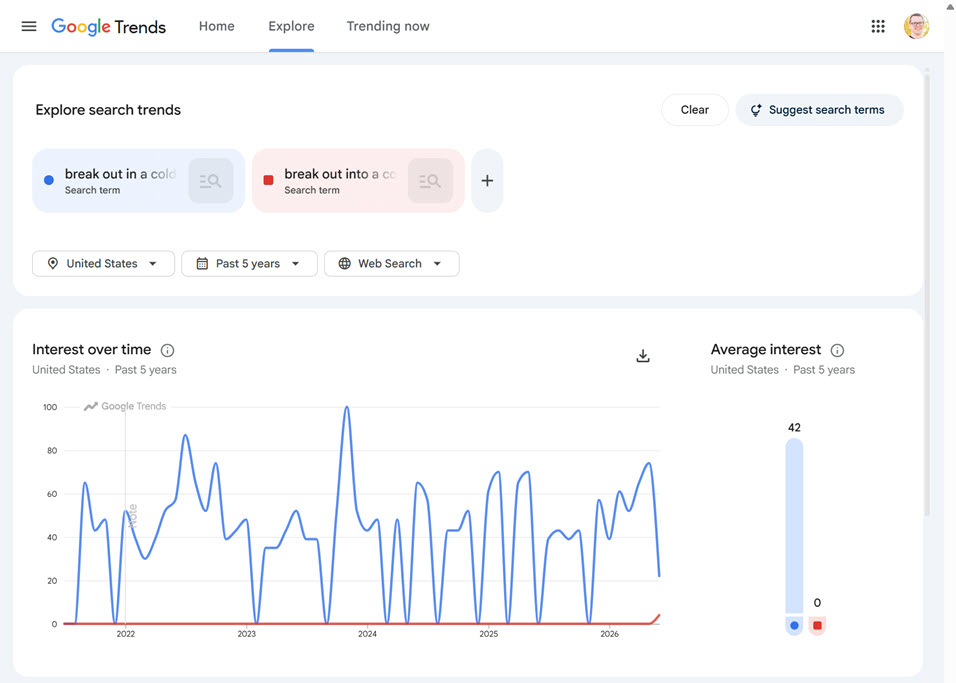
- break out in a cold sweat
- break out into a cold sweat
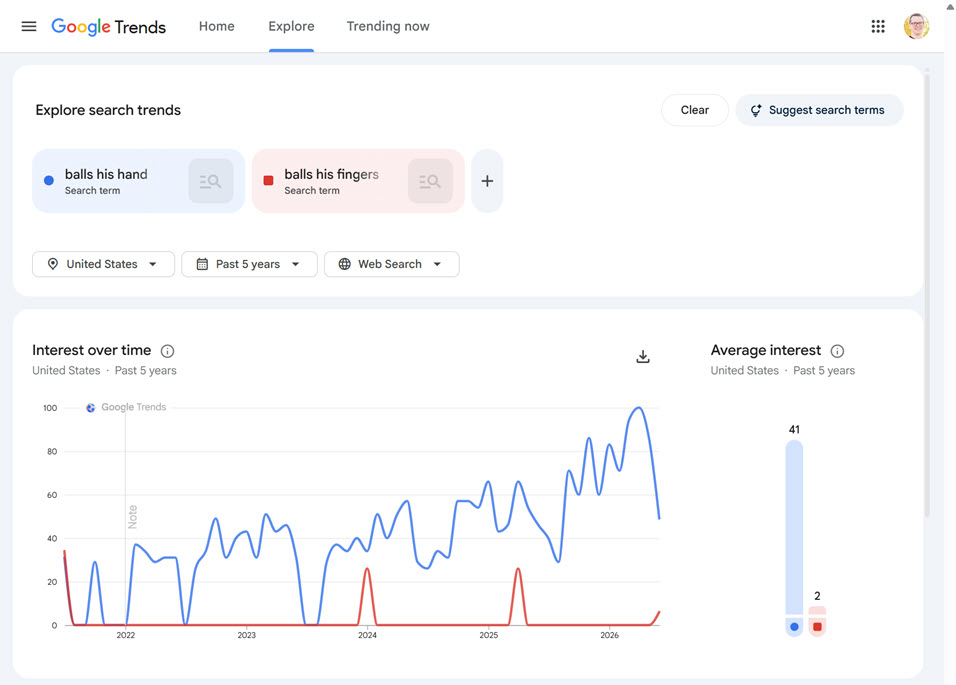
- balls his hand
- balls his fingers
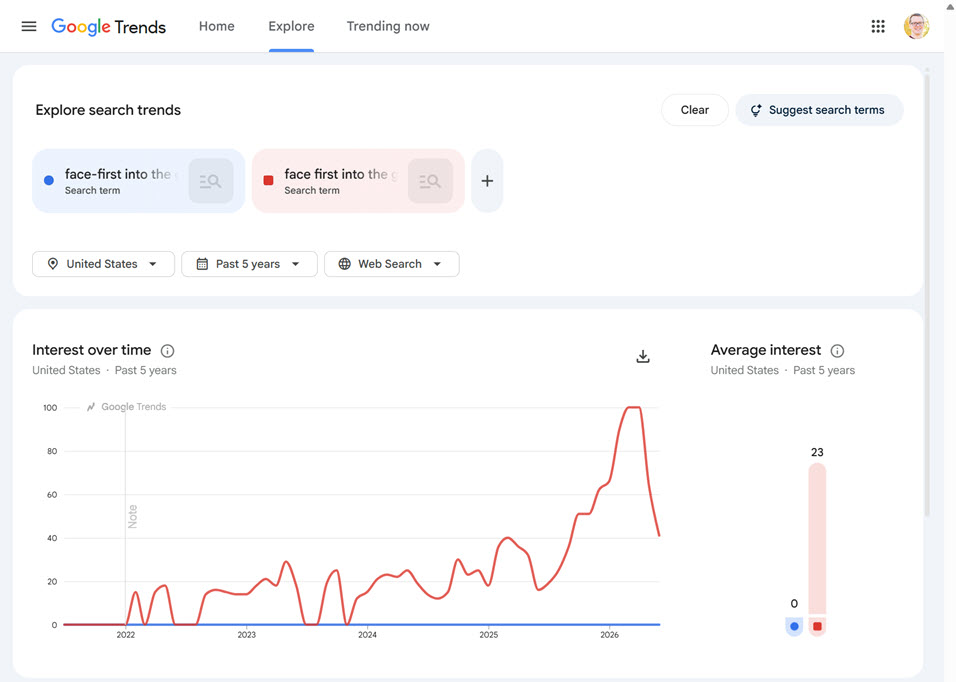
- face-first into the ground
- face first into the ground
- over-indexed
- overindexed
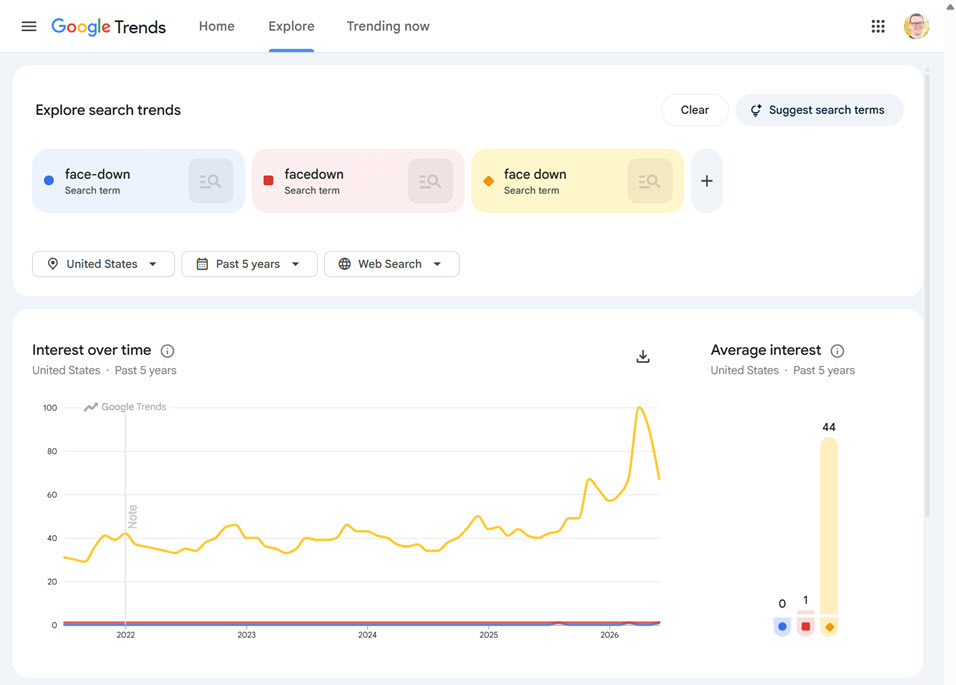
- face-down
- facedown
- face down
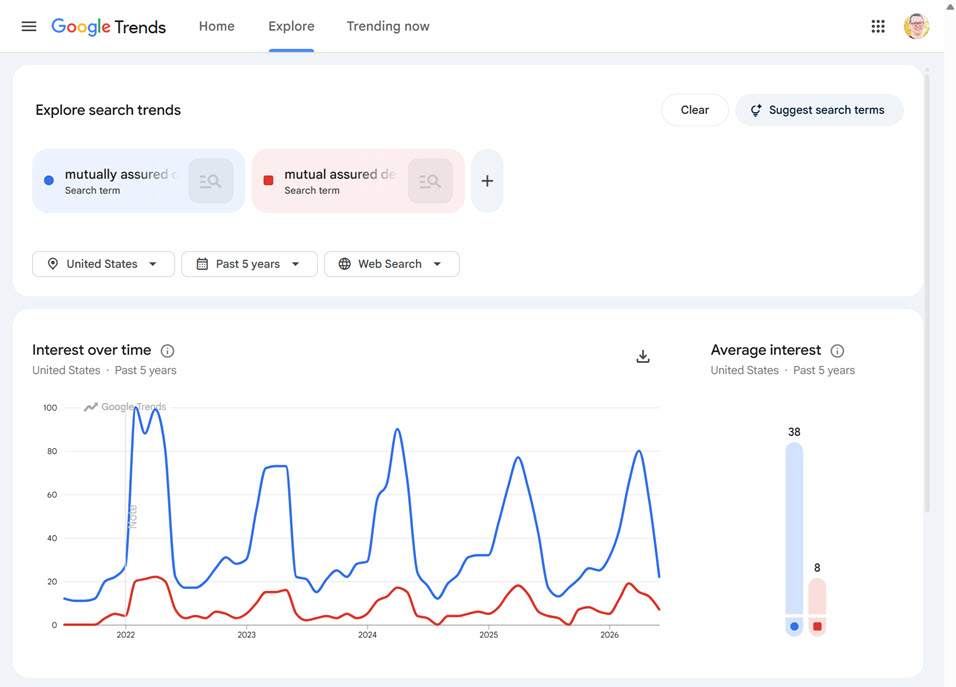
- mutually assured destruction
- mutual assured destruction
Google Trends gives us the answers below. Some are definitive; others less so. Regardless, it’s a helpful tool in understanding what the common usage is.
Related posts:
The mistakes my copy editor caught
To get future posts …
