Book review: ‘Story’ by Robert McKee

Don’t be fooled by the fact that the subtitle of this book includes the word “screenwriting.” This book is for anybody who wants to understand storytelling at a deep, technical level.
It covers story structure, down to the level of beat. Idealist, pessimist, and ironist controlling ideas. Character development and inner, personal, and extra-personal conflicts. How to handle the inciting incident. Designing acts and scenes. Selecting your cast of characters. And all with great examples from famous films you’d likely seen.
If I were creating my own masterclass on creative writing, this would be one of the core books.
I give it 5 stars and 13 dog-ears and 4 Post-its.
Essential story building blocks
In Story, there are two concepts that were particularly helpful to me as I’ve been writing my sci-fi trilogy. The first concept is that beats create scenes, scenes create sequences, sequences create acts, and acts create stories—with each of those marking a change. The beats mark changes in action/reaction, with those culminating in the turn of a scene, with those culminating in a final scene of a sequence that has a greater impact than the earlier scenes in the sequence … and so on, with acts culminating with the biggest changes.
All that’s to say that with every beat, scene, sequence, and act turns on a change of fortune for one of the main characters, either for better or worse. The more reversals the better, since those are usually born out of conflict and make for more of an emotional rollercoaster. That may seem intuitive, but keeping this top of mind has really helped me avoid flat scenes that don’t affect the characters.
One of my favorite scenes in the second book in my series features three worsening beats for the male protagonist, then two improving beats that has him looking on the bright side of things—only to have the chapter end the sequence with a full reversal of his fortunes, where he actually gets the thing he initially wanted but now no longer wants. Then the next chapter starts with it getting even worse. It’s a torturous ride and a lot of fun!
The negation of the negation
And the second concept is the Negation of the Negation. McKee explains it like this:
“A story that progresses to the limit of human experience in depth and breadth of conflict must move through a pattern that includes the Contrary, the Contradictory, and the Negation of the Negation. … Negation of the Negation means a compound negative in which a life situation turns not just quantitatively but qualitatively worse. The Negation of the Negation is at the limit of the dark powers of human nature.”
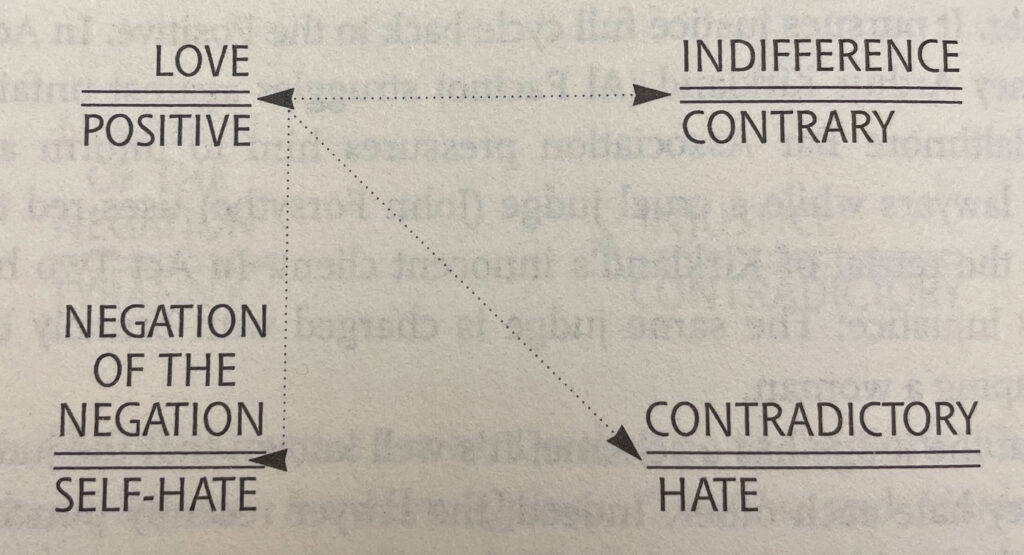
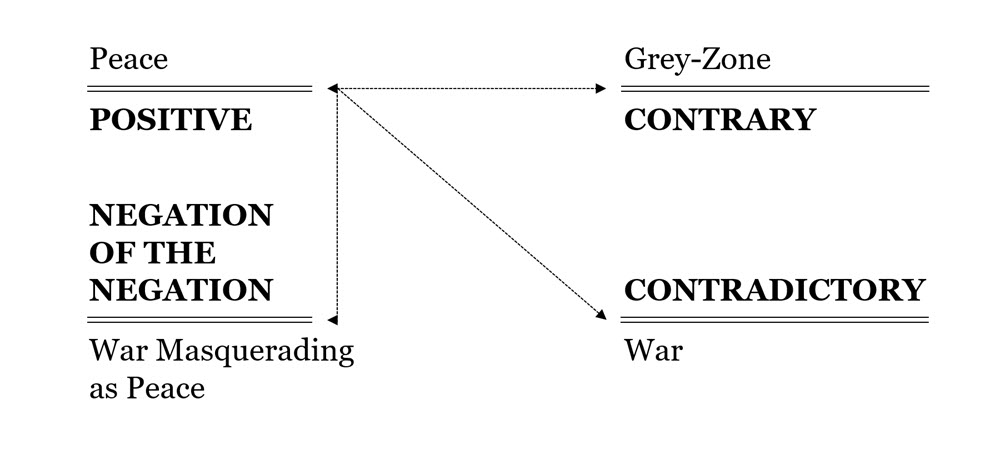
My takeaway is that love vs. hate, for example, is too black and white. The Negation of the Negation is a more interesting twist on hate, such as self-hate or hatred pretending to be love. I got really excited when I read about this, because it turned out my sci-fi trilogy already leveraged this concept, as the overarching extra-personal conflict is a war that’s masquerading as peace.
And a separate novel idea I’ve been outlining and amassing notes about involves a devotion to love lost that keeps the protagonist from moving forward with their life.
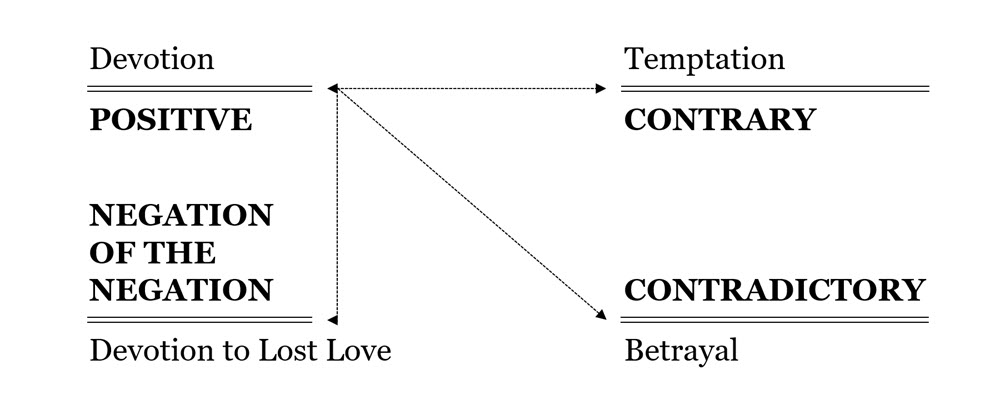
The Negation of the Negation is a fascinating concept that I’d never encountered anywhere else. If you’re working on your own story, see if you can fit it into this square of Positive, Contrary, Contradictory, and Negation of the Negation themes. It might show you how to uplevel your theme. It’s also fun to brainstorm potential squares as a starting point for a story.
And for all of you non-writers, it’s a concept that you’ll find in some of your favorite, most-gripping stories now that you know what to look for.
Related posts:
Book review: ‘The Fantasy Fiction Formula’ by Deborah Chester
Book review: ‘The Writer’s Journey’ by Christopher Vogler
To get future posts…
