Using Google Trends to track language evolution

I believe in the evolution of language. Words mean what most people think they mean, because language belongs to the people, not to academics or institutions. The lexicon refuses to be pinned down. Instead, it’s constantly shifting, growing, and changing shape. 

While dictionaries are helpful for spellings, they tend to lag on hyphenations and don’t tend to be helpful when it comes to phrasings. My favorite tool for deciding on those issues is Google Trends.

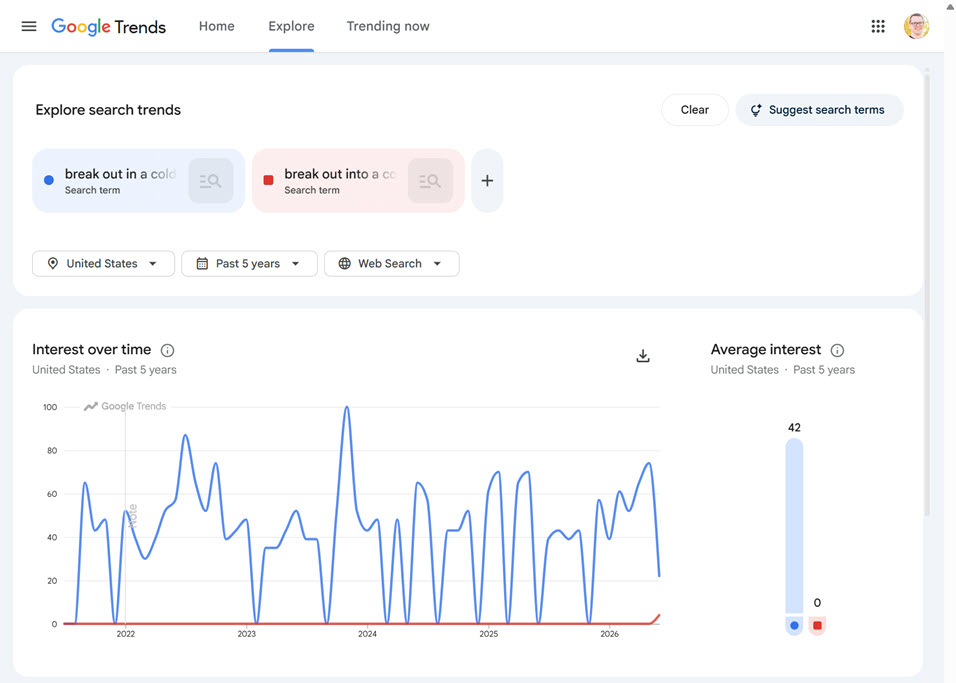
This free tool allows you to see the popularity of a word or phrase over time. As the name implies, it’s great for understanding trends, like the decline in interest in NFTs and the metaverse. But it also allows you to compare the popularity of two or more things.

That makes it handy for making editing decisions.

Let’s play a game. 

Which of these is the more common usage?

  1. break out in a cold sweat 
  2. break out into a cold sweat
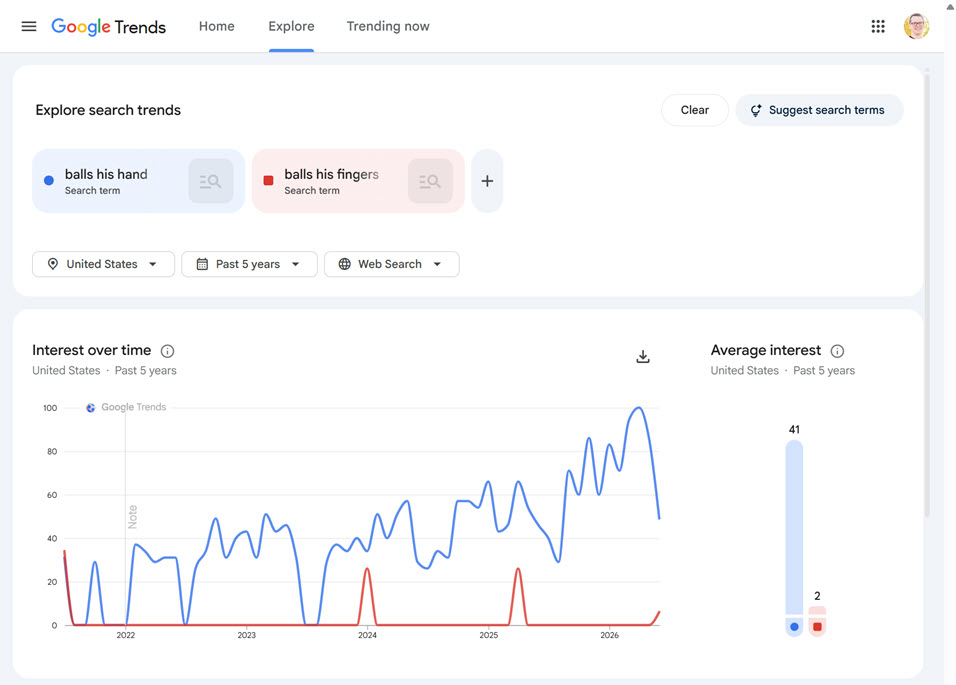
  1. balls his hand 
  2. balls his fingers
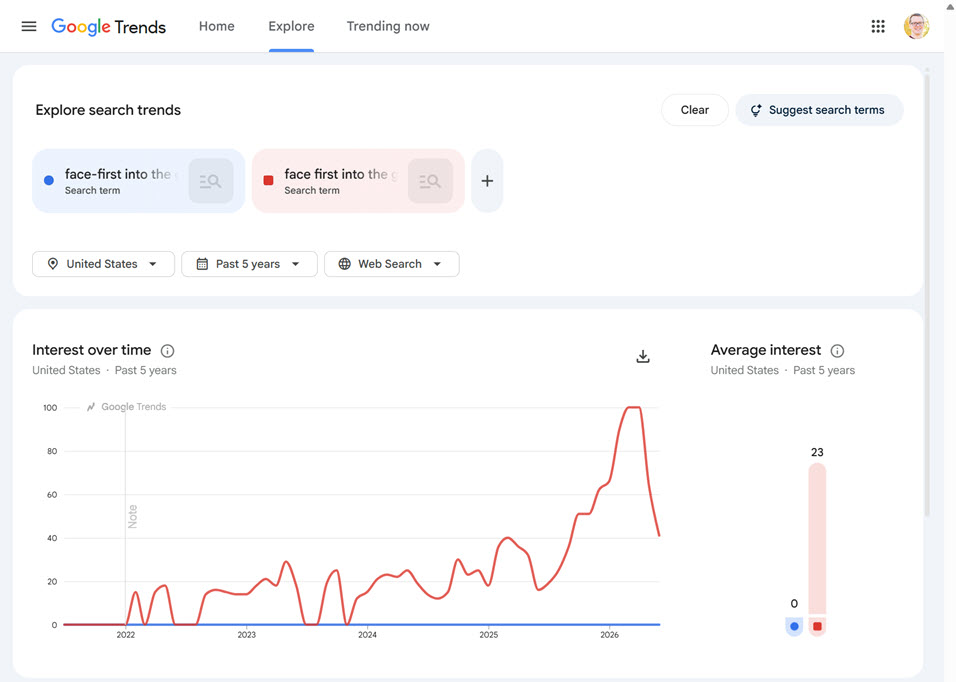
  1. face-first into the ground 
  2. face first into the ground
  1. over-indexed
  2. overindexed
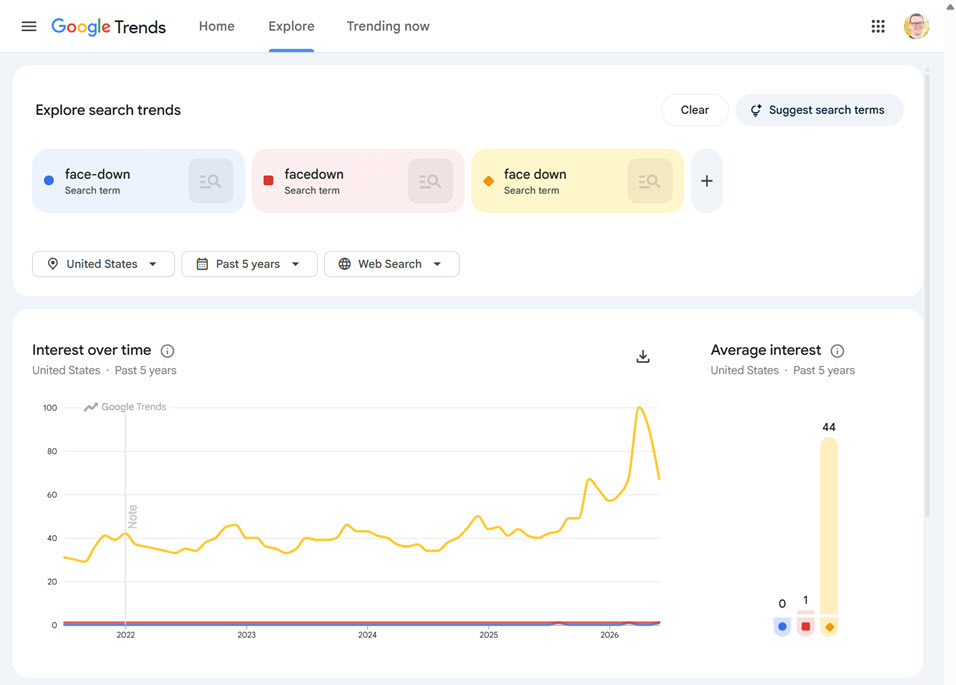
  1. face-down
  2. facedown
  3. face down
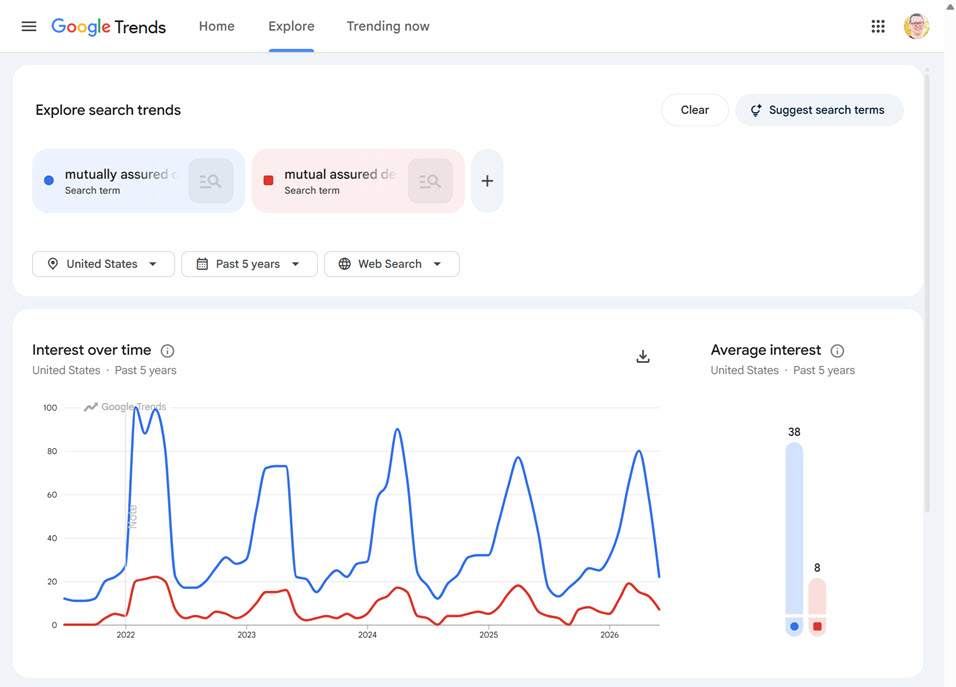
  1. mutually assured destruction 
  2. mutual assured destruction

Google Trends gives us the answers below. Some are definitive; others less so. Regardless, it’s a helpful tool in understanding what the common usage is.


Related posts: 

The mistakes my copy editor caught


To get future posts … 
How many of my manuscript’s 600+ em dashes did my copy editor cut?

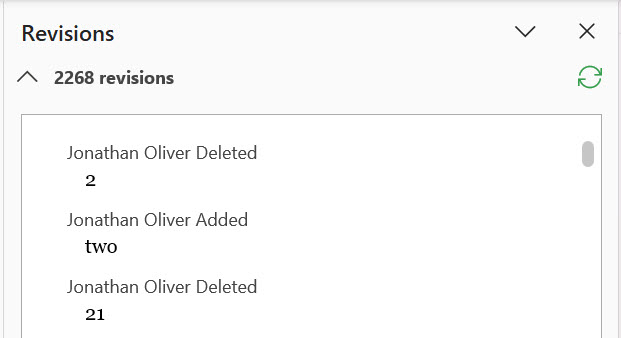
The manuscript I gave my copy editor contained more than 600 em dashes. He flagged a bunch. However, only two were for outright removal. Another 20-plus were to be replaced mostly with ellipses, as well as a few commas.

I made all the suggested changes, and even removed or replaced a few more here and there, as I really was misusing them in places.

At the same time, he suggested adding two more—and along the way I added another five. 

The continuing backlash against em dashes

I get it: No writer wants their book or article or even social post to look like it was written by AI.

However, the idea that em dash use is a marker to AI use is farcical to me. You know what AI copy also uses a lot of? Commas. And periods. I’m not going to stop using those punctuation marks either.

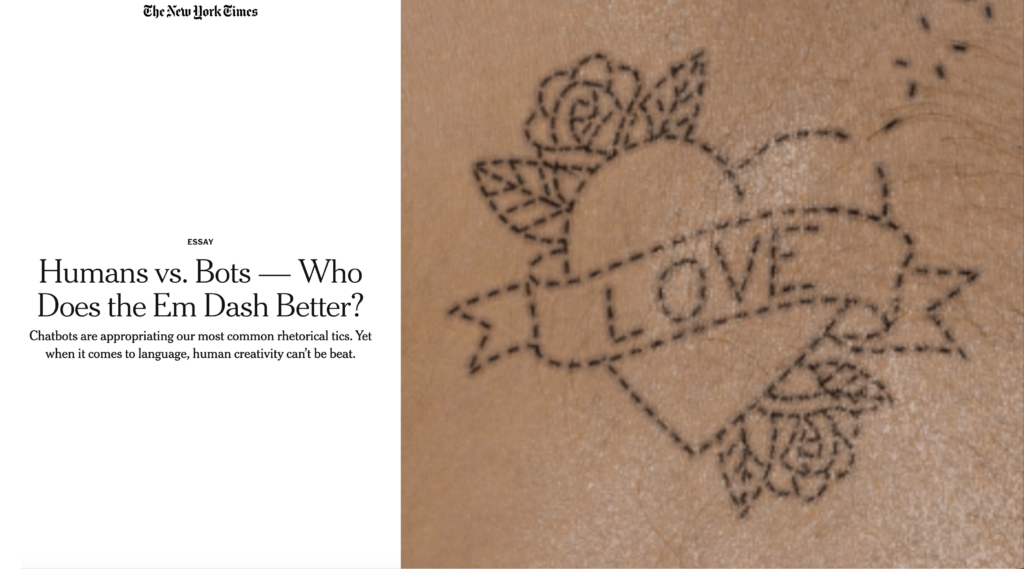
So, on the question of “Is the em dash still a worthy punctuation mark, or has chatbot output devalued it?” I agree with The New York Times (gift article link) that the em dash is “the people’s punctuation mark.” Now and forever.

Long live em dashes! 

(But also, how about those ellipses? We’re not giving them enough credit.)

Gift article link to New York Times article

Related posts:

The mistakes my copy editor caught

My sci-fi novel is now in the hands of my copy editor

Confession: I love em-dashes


To get future posts… 

The mistakes my copy editor caught

Besides some verb tense errors and other errors that Word spell check should have caught, my copy editor caught:

  • A misspelled character name that was wrong in the book, but correct in my book notes
  • An incorrect title for a character, which was also correct in my book notes
  • A “right arm” that should be been “left arm,” which created a continuity problem
  • A couple of “lays” that should have been “lies”; and a “laying” that should have been a “lying”
  • A “right” that should have been “rite”
  • A “mulling” that should have been “milling”
  • A few instances of “his” that should have been “her,” and vice-versa
  • Was missing am/pm on a reference to time
  • Was unnecessarily putting commas after interrupted dialogue (i.e., “But I—,” he stammers. >> “But I—” he stammers.)
  • Sounds like click-clack and clip-clopping that weren’t italicized
  • Some internal dialogue wasn’t italicized
  • Inconsistent styling of internal dialogue quotes

My copy editor also flagged a couple of things he wasn’t sure about, which allowed me to clarify those in the text to avoid confusion.

What I didn’t change

My copy editor recommended adding spaces on either side of the many, many em dashes in my novel, but I kept them without. I also didn’t spell out numbers that were 10 or more, or numbers that have units of measurements with them.

Those recommendations are based on The Chicago Manual of Style. As a former journalist, I guess I’ve spent too long following AP Style, which always favors more compact communication. I’m willing to roll the dice on bucking Chicago Style and see what happens down the line.

Spell Check: Microsoft Word vs. Google Docs

I’ve known for a while that Microsoft Word’s Spell & Grammar check isn’t good, especially compared to Google Docs’, which is excellent. However, some of the simple typos and grammar errors that my copy editor found really laid bare how awful Word is at understanding basic grammar. I may need to make a switch for my future novels.


Related posts:

What’s in my 683 pages of book notes

Confession: I’ve written all my books in Microsoft Word


To get future posts… 

My sci-fi novel is now in the hands of my copy editor

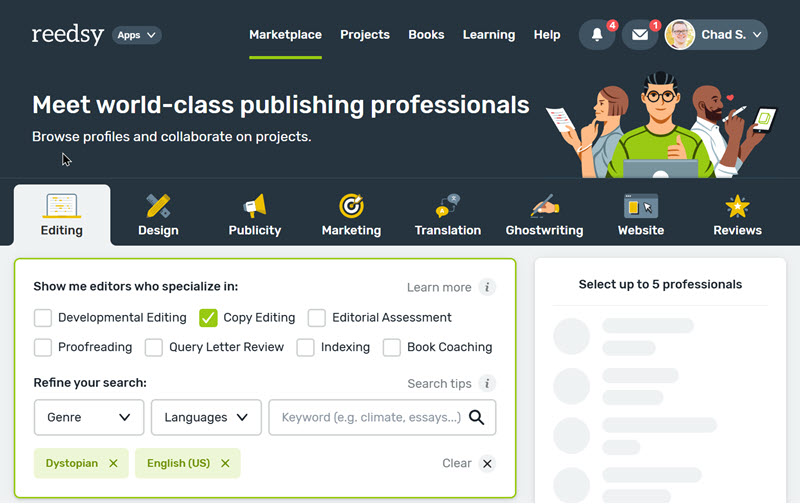
After nearly 6 months of revisions while working with my developmental editor, I’ve now handed my novel off to my copy editor, Jon, which I also secured via Reedsy. 

What they’re doing

The scope of work includes:

  • Identifying and correcting any spelling, grammar, factual, and formatting errors
  • Editing to ensure the consistency of the prose and the clarity of the narrative

Supplemental materials

To aid in this effort, I supplied them with:

  • A character list
  • A timeline of major events, including dates
  • A glossary of 27 terms, including neologisms and other words and phrases that have a unique meaning in my book world
  • A style guide that specifies the verb tense used throughout the novel, the fonts used, and the styling of internal dialogue, recalled dialogue, official titles, song and book titles, etc.

Scheduling

In an effort to give myself some extra motivation, and because editors schedule months in advance, I booked both my developmental editor and copy editor at the same time. I kicked off work with my developmental editor in November of last year and got my manuscript back (with editorial letter, etc.) in mid December. And I assumed that I’d be able to turn around the edits by the beginning of March. I was wrong.

I had to push the start of copy editing back a month. Thankfully, I recognized the need early enough that my copy editor was able to switch my scheduled block with another client. Even with the start date pushed back, I was rushing. I suspect there are some additional errors because of the speed of revisions. I guess we’ll see. 


Related posts:

My sci-fi novel is now in the hands of a developmental editor

7 questions you should be able to answer before working with a developmental editor

What I got back from my developmental editor


To get future posts… 

How I use beta readers

Compared to developmental editors, copy editors, and proofreaders, beta readers have a much more amorphous role in the book-writing process. Ultimately, they’re a group of readers that align well with the ideal reader you hope to have for your book. So, if your beta readers have problems with your book, then your book will struggle to satisfy your intended audience.

Beyond that, however, beta readers can be used in a variety of ways and at various times during the writing process. This means that authors need to recognize their choices and guide expectations to get what they need.

Where to find beta readers?

Some authors use for-hire beta readers they find online or recruit beta readers via social. I used family members and friends. Regardless of the route you go, there are a few requirements you need from your beta readers:

  1. They must have some familiarity with whatever genre you’re writing in. My trilogy is dystopian sci-fi, so I only asked folks who liked reading in that genre.
  2. They must be able to provide honest feedback. It doesn’t have to be mean, but they have to be able to point out stuff that’s not working for them. If they’re overly concerned with hurting your feelings, then it’s probably not going to be useful for either person.

On that second point, your instructions to beta readers are vital.

What kind of feedback to ask for?

Even though my beta readers absolutely found typos and missing words and other mistakes, I told them that I was most interested in:

  • Anything that confuses you, causes you to re-read a passage, or otherwise jars you out of the story
  • Places in the story that move too slowly
  • Details that seem off, actions that seem out of character, events that seem illogical, etc.
  • Anything you particularly liked 

The feedback from each one of my beta readers led to changes, both big and small. I think that was partly due to when I used each one.

At what point to use beta readers?

Beta readers can be used at any time during the writing process once you believe you have a solid draft. What really helped me was staggering my beta readers. Rather than having a bunch of them likely pointing out the same problems, I shared my manuscript with one or two beta readers at a time. Then I fixed the issues they identified and shared the revision with the next beta reader, and so on.

Author Nicole Janeway recommends starting by sharing just the first chapter, because it lowers the initial commitment and gives you a chance to see if the person is a good fit. She also says that the first chapter is critical, so putting more emphasis there is wise. On that point, I couldn’t agree more. I wish I’d done that. I would have revised the first chapter and then asked them to read it over again when they got the full manuscript.

I have a few beta readers in reserve that I want to share the book with after I’ve finished incorporating the feedback from my developmental editor. They’ll get the cleanest experience with the book, so I’ll be expecting the feedback to be much different. (Fingers crossed.)

How long should beta readers have to give feedback?

Everyone’s time constraints are different. Because I knew pretty early on that I wanted to at least draft the entire trilogy before publishing the first book, I knew I had time, because when I wasn’t editing book 1, I was drafting book 2. 

Staggering my beta readers and editing between rounds took around 9 months for book 1. In most cases, I gave my beta readers a couple of months to read my manuscript. They’re all busy people. I had a similar process for book 2, which has been seen by all my beta readers at this point, too.

You may need much tighter turnarounds if you have firm deadlines.

How many beta readers should you use?

Obviously, approaches vary. Janeway recommends as few as 8 to as many as 20. Meanwhile, in Before the Bestseller, Alex Strathdee recommends throwing door open to beta readers—like 200!—and listing them as “contributors” in the acknowledgments. He says many beta readers end up being part of the book’s launch team to help promote it. 

This is a great idea for nonfiction books (wished I’d done that), but seems less appropriate for fiction. That’s because a novel can change much more dramatically during the editing process, and because ARC readers seem to fill some of that promotion role for fiction.

For my part, I’ll have at least 8 by the end, but probably not many more.

Do beta readers replace a developmental editor?

In my experience, there’s no comparison between beta readers and a developmental editor. They’re for different purposes. 

Beta readers are, well, readers. So, the feedback is from that perspective.

Meanwhile, a developmental editor methodically breaks down your plot and characters, and also compares it to genre standards. The volume of feedback is much higher and much more technical. My developmental editor gave me 35 pages of feedback, plus in-line comments, plus recommended I read four books on novel-writing and shared several articles on craft. Beta readers can’t and won’t do that. That said, beta readers will tell you how you’re connecting with average readers.


Related posts: 

My sci-fi novel is now in the hands of a developmental editor

Recommended reading on novel writing from my developmental editor

7 questions you should be able to answer before working with a developmental editor


To get future posts… 

What I got back from my developmental editor

Six weeks after handing my debut novel off to my developmental editor, Chersti, I’ve got feedback that will drive the next few rounds of edits. Here’s what I received:

35-page developmental review letter

This letter discusses my novel at a high level, delving into:

  • The writing and story’s strengths. For example, my story’s high-concept premise has a lot of potential; it has plot twists and reveals that will surprise the reader; and the worldbuilding is fantastic with solid depth.
  • The writing and story’s areas for improvement. For example, the story has pacing issues; the plot needs to be better framed around the overall premise; and blocking issues during the action scenes make it harder for the reader to visualize what’s happening.
  • The ideal audience for the book. Category: Commercial. Audience: Adult. Bracket: Teens + 20-somethings + Adults. Genre: Science Fiction. Subgenre: Near Future Dystopian.
  • The plot and structure. It dissects the story’s three major plotlines, pointing out opportunities to clarify, improve, and simplify.
  • Plot holes, of which there are only a few minor ones.
  • The premise. It compares the jacket copy I provided to the story itself.
  • The stakes. While the stakes I created are present and high, it recommends ways to emphasize those stakes.
  • The story’s beginning. I’ve rewritten and edited chapter 1 more than any other part of my novel … and I have more work to do there. It’s so hard to nail the opening, because there’s just so much to set up.
  • The main characters, including their goals, development, and hero moments—and how all of that ties into the overall story question.
  • The setting and descriptions, which are conveyed well with good details, except in chapter 1. (womp, womp)
  • The theme. While my subthemes are clear, my main theme is less so.

Nine articles, plus other recommended content

To help me better understand how to fix some of the issues in my novel, my developmental editor also gave me nine articles. Beyond that, she suggested watching a particular Star Trek episode and the show Pluto, each paying attention to particular elements. She also suggested reviewing two books on novel writing I’d previously read, and reading four additional books on craft.

In-line edits

These aren’t copyedits, but notes on specific spots where the narrative gets confusing, where more details are needed, character motivations need to be clarified, etc. I’m making my way through these now.

The opportunities highlighted in-text will join the list of 43 to-dos I compiled from the developmental review letter. Most require edits in particular moments in the story, but a few are global edits that will require their own rounds of read-throughs. Nearly all of the feedback is addressable, but a few items would seriously impact the plots of books 2 and 3 in the trilogy. When I sit down with my developmental editor in a month or two for a consultation, our conversation will focus on those trickier items and how to find the least disruptive fixes.

Overall, I’m thrilled, as there’s nothing terminal in the feedback.


Related posts:

7 questions you should be able to answer before working with a developmental editor

Recommended reading on novel writing from my developmental editor

Book manuscript format guidelines


To get future posts… 

Book manuscript format guidelines

While I’ve written five previous books, I self-published all of them. So, I’d never needed to learn manuscript format guidelines before. But when I started working with my developmental editor, Chersti, she wanted it properly formatted.

Here’s the manuscript formatting I followed:

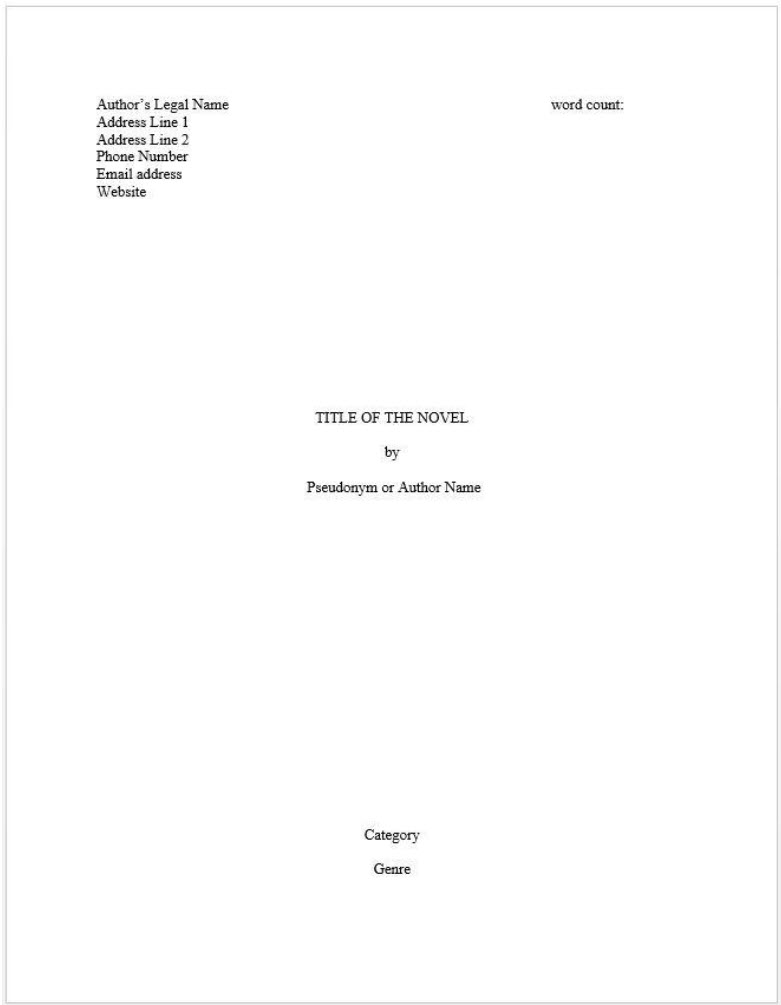
Title page: single spaced with no running header. Contact details (Legal Name, Address, Phone Number, Email, Website) in top left corner. Manuscript word count to nearest 1,000 words in top right corner. Title centered halfway down page in ALL-CAPS. Your (pen) name 2 lines under title. Book category (i.e., Adult, Young Adult) centered at bottom in Title Case. Book genre (i.e., Science Fiction, Paranormal) centered below that in Title Case. 

Industry standard manuscript format for a title page

Font: 12-point Times New Roman in black  

Margins: 1 inch on all four sides

Alignment: align left (except where otherwise specified) 

Line spacing: double spaced with 0 pt “Before” and “After”

Spaces after periods: 1

Paragraph indentation: 0.5″ (except for opening paragraphs of chapters and after scene breaks), set in Paragraph menu, not with tab characters

New chapters: insert page break before each one

Chapter number: center and bold

Chapter subtitle: center under chapter number

Time gap since last chapter: center and italicize 2 lines above chapter number

Chapter breaks: center three asterisks (* * *)

End: type “The End” to reassure readers that no pages are missing

Running header: insert header aligned right with LASTNAME / TITLE / PAGENUMBER

Be aware that every editor, agent, and publisher may want something slightly different, so consult with them on the manuscript format they prefer. But in the absence of being able to get that information, if you follow the manuscript format above, you should be in good shape.


To get future posts… 

7 questions you should be able to answer before working with a developmental editor

When I was in talks to work with my developmental editor, Chersti, she asked a bunch of required questions about me, including my writing experience, my goals, whether I’m a plotter or pantser, and why I wanted to work with them. She also asked me seven optional questions about my novel.

While I didn’t have to answer them, I couldn’t help but feel like it would signal a lack of commitment if I didn’t—or a lack of confidence in my novel if I couldn’t. So, I invested the time to answer these very reasonable questions:

  1. What is the inciting incident of your story?
  2. What is your main character’s goal?
  3. What or who gets in the way of their goal?
  4. Is there a villain or antagonist? Who?
  5. What’s the hero moment during your climax?
  6. How many point-of-view characters are there?
  7. How many subplots are there?

Honestly, it felt great to be able to easily answer these questions. And that was despite the fact that the answers were complicated by having more than one POV character and my book being the first in a trilogy. For instance, there’s not only an inciting incident for the book, but also one for the series. Also, the POV characters each have their own goals and hero moments.

Those questions really get at the basic building blocks of a story, such as having a clear beginning and end, and having character conflict. In hindsight, if I hadn’t been able to answer those questions, I hopefully would have delayed moving forward with my developmental editor. Thankfully, I didn’t have to do that. Full steam ahead!


Related posts:

Recommended reading on novel writing from my developmental editor

My sci-fi novel is now in the hands of a developmental editor


To get future posts… 

My sci-fi novel is now in the hands of a developmental editor

After multiple rounds of edits, including feedback from my alpha reader and beta readers, I’ve handed book 1 of my dystopian sci-fi trilogy off to a developmental editor, Chersti. The scope of what a developmental editor does varies, but here’s what mine will deliver:

  • An overview of the strengths and weaknesses of the novel’s plot, setting, and characters
  • An analysis of my writing, including areas for improvements and specific ways to strengthen the manuscript
  • An analysis of the target audience for my novel
  • A detailed analysis of the plot and structure of the story, including the beginning and end, identification of any plot holes, completeness of the worldbuilding, a discussion of story themes, effectiveness of plot twists, and more
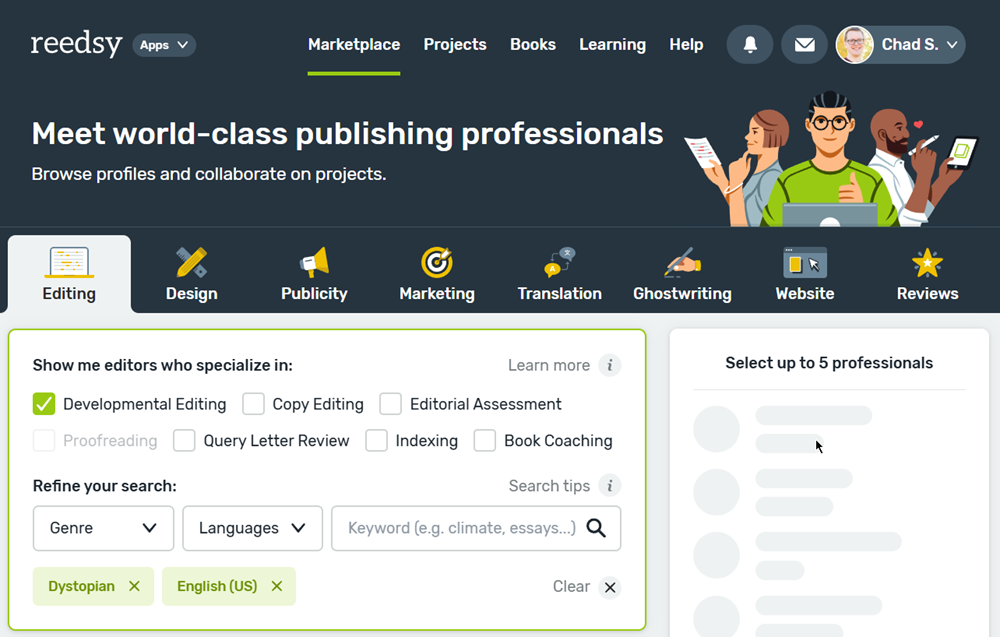
I found my developmental editor on Reedsy

In addition to that feedback, which will add up to 20 pages or more, my developmental editor will share in-line suggestions related to the plot, setting, and characters. And once I’ve had time to ingest all of that, I’ll have some consultative time with them to talk out the less-clear changes and other things I’m wrestling with.

While I’m confident my novel is ready for this level of scrutiny, I’m still nervous about what I’ll hear back. Wish me luck!


Related posts:

Recommended reading on novel writing from my developmental editor

7 questions you should be able to answer before working with a developmental editor


To get future posts…