WIP update

📚 Project: T.A.G.

Dystopian new adult near-future sci-fi trilogy

Book 1 

📗 Manuscript complete!

✍️ 90,000 words, 23 chapters

▶️ With developmental editor 📝

I was querying agents, but decided to pivot and work with a developmental editor before doing any more. 

Book 2

📕 Draft complete!

✍️ 100,000 words, 27 chapters

▶️ Out with final beta reader 📤

Waiting to hear back from my last beta reader. Will then hand it off to developmental editor.

Book 3

📘 Work in progress…

✍️ 37,000 words, 11 chapters

▶️ Goal to finish draft by end of year 🥂

Finishing by year-end may be a stretch, given all the work I’ve been doing on book 1 with my developmental editor. However, I’ve now done a detailed outline of the final book, which may give me the momentum I need. Fingers crossed.


📚 Project: W.A.

Utopian interstellar sci-fi trilogy

Books 1, 2, and 3

💡 Ideation, with 13,000 words of book notes


To receive future posts for free or to become a Patron and support my dystopian sci-fi novel and get special thank-you goodies upon its publication, subscribe on Substack →
Book manuscript format guidelines

While I’ve written five previous books, I self-published all of them. So, I’d never needed to learn manuscript format guidelines before. But when I started working with my developmental editor, they wanted it properly formatted.

Here’s the manuscript formatting I followed:

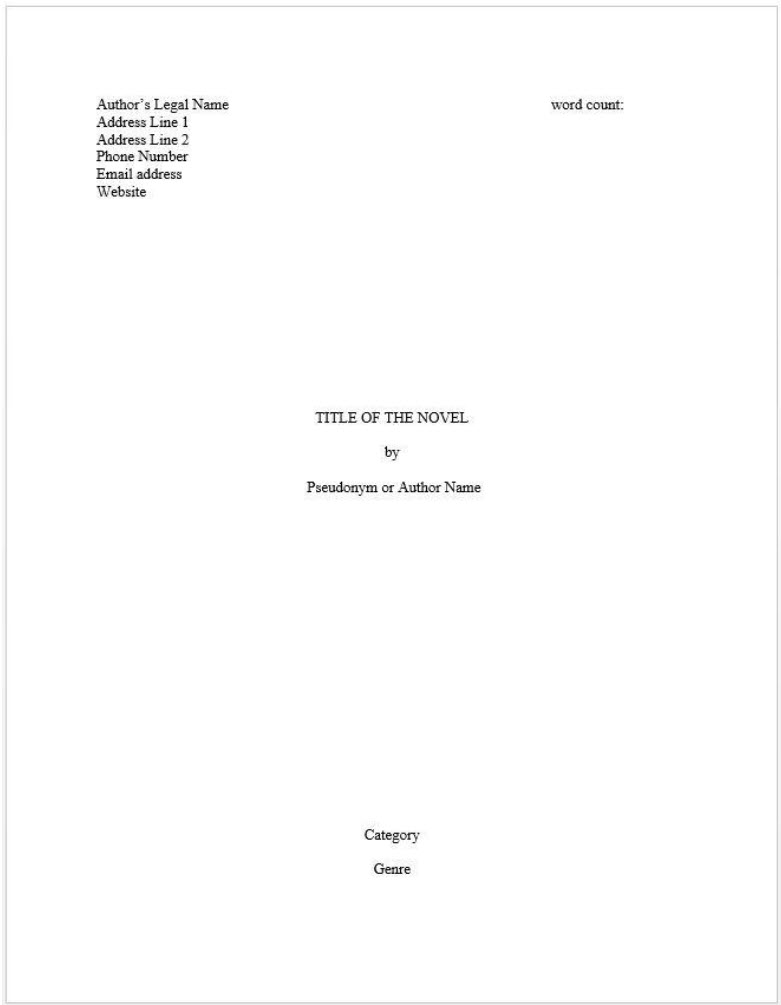
Title page: single spaced with no running header. Contact details (Legal Name, Address, Phone Number, Email, Website) in top left corner. Manuscript word count to nearest 1,000 words in top right corner. Title centered halfway down page in ALL-CAPS. Your (pen) name 2 lines under title. Book category (i.e., Adult, Young Adult) centered at bottom in Title Case. Book genre (i.e., Science Fiction, Paranormal) centered below that in Title Case. 

Industry standard manuscript format for a title page

Font: 12-point Times New Roman in black  

Margins: 1 inch on all four sides

Alignment: align left (except where otherwise specified) 

Line spacing: double spaced with 0 pt “Before” and “After”

Spaces after periods: 1

Paragraph indentation: 0.5″ (except for opening paragraphs of chapters and after scene breaks), set in Paragraph menu, not with tab characters

New chapters: insert page break before each one

Chapter number: center and bold

Chapter subtitle: center under chapter number

Time gap since last chapter: center and italicize 2 lines above chapter number

Chapter breaks: center three asterisks (* * *)

End: type “The End” to reassure readers that no pages are missing

Running header: insert header aligned right with LASTNAME / TITLE / PAGENUMBER

Be aware that every editor, agent, and publisher may want something slightly different, so consult with them on the manuscript format they prefer. But in the absence of being able to get that information, if you follow the manuscript format above, you should be in good shape.


To receive future posts for free or to become a Patron and support my dystopian sci-fi novel and get special thank-you goodies upon its publication, subscribe on Substack →

Villains vs. antagonists

One of the questions my developmental editor asked me before taking me on was “Is there a villain or antagonist in your story? Who?” When I answered the question, I didn’t mention villains, only antagonists. That’s because I don’t think there are any true villains in my story, only characters who have desires that run counter to what the heroes want. 

In fact, I have three tiers of antagonists in my story:

  • Series antagonists, who drive the entire series
  • Book antagonists, who drive the action of each book (some series antagonists become book antagonists)
  • Threshold guardian antagonists, who present mid-book blocks our heroes must overcome to progress toward their goals (Threshold guardians are a character type discussed in The Writer’s Journey by Christopher Vogler.)

I like what Jack Anderson, the author of The Return of Moriarty, says about the differences between heroes and villains. In particular, I agree that while “heroes die for their beliefs, villains kill for them.” But I would add one more quality I think separates villains from antagonists: relatability.

DC Comics vs. Marvel Comics

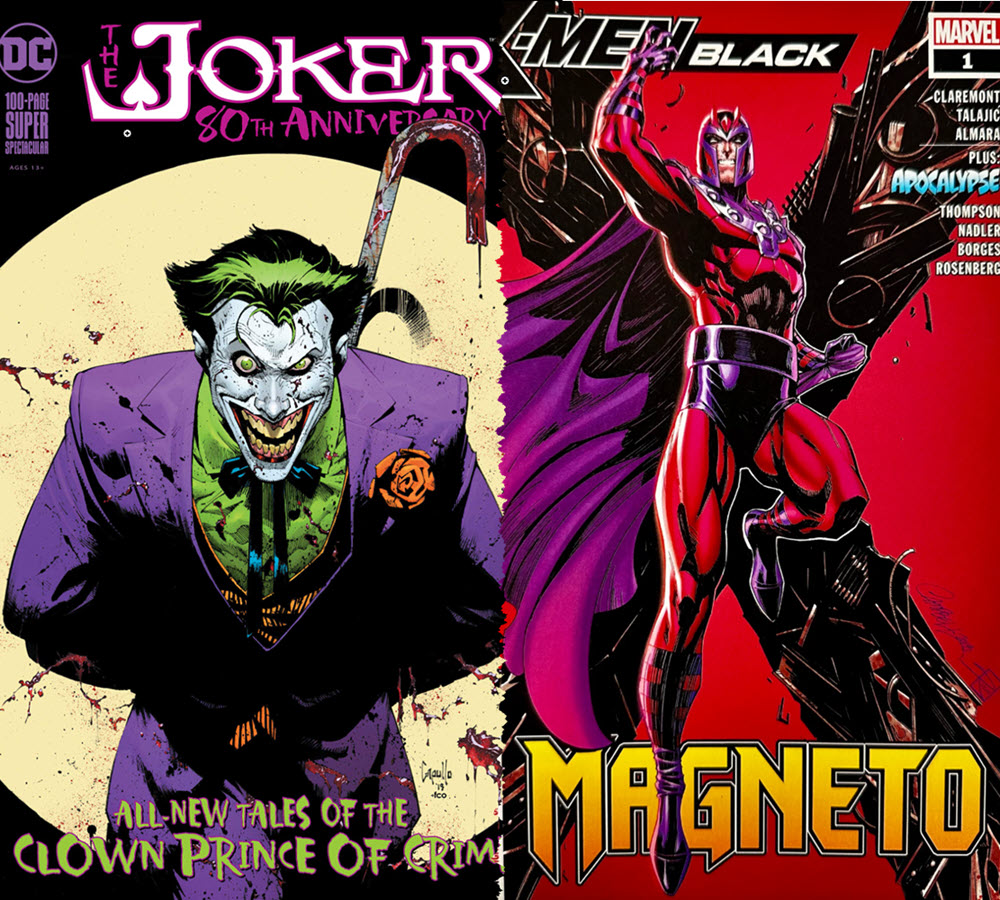
There’s no better example of this distinction in action than the stories from DC and Marvel. DC features iconic villains like the Joker, the Riddler, Scarecrow, Two-Face, Bane, Lex Luthor, and Darkseid. Many of them are certifiably insane, while others are egomaniacal sociopaths and ruthless tyrants.

The Joker is insane, while Magneto is a zealous mutant rights advocate.

On the other hand, Marvel features iconic antagonists like Magneto, Thanos, Loki, and Kingpin. They’re bad and absolutely kill others in the name of their beliefs, but they’re not insane, two-dimensional characters. Their heinous actions stem from relatable worldviews, such as Magneto’s desire to protect mutants from racist persecution and Thanos’s desire to alleviate resource scarcity caused by overpopulation. These characters also have other redeeming characteristics, such as the ability to care for others.

If you’re into antagonists and protagonists who are rainbows of gray tones, rather than black and white cartoon characters of evil and good, then my sci-fi trilogy is for you.


To receive future posts for free or to become a Patron and support my dystopian sci-fi novel and get special thank-you goodies upon its publication, subscribe on Substack →
7 questions you should be able to answer before working with a developmental editor

When I was in talks to work with my developmental editor, they asked a bunch of required questions about me, including my writing experience, my goals, whether I’m a plotter or pantser, and why I wanted to work with them. They also asked me seven optional questions about my novel.

While I didn’t have to answer them, I couldn’t help but feel like it would signal a lack of commitment if I didn’t—or a lack of confidence in my novel if I couldn’t. So, I invested the time to answer these very reasonable questions:

  1. What is the inciting incident of your story?
  2. What is your main character’s goal?
  3. What or who gets in the way of their goal?
  4. Is there a villain or antagonist? Who?
  5. What’s the hero moment during your climax?
  6. How many point-of-view characters are there?
  7. How many subplots are there?

Honestly, it felt great to be able to easily answer these questions. And that was despite the fact that the answers were complicated by having more than one POV character and my book being the first in a trilogy. For instance, there’s not only an inciting incident for the book, but also one for the series. Also, the POV characters each have their own goals and hero moments.

Those questions really get at the basic building blocks of a story, such as having a clear beginning and end, and having character conflict. In hindsight, if I hadn’t been able to answer those questions, I hopefully would have delayed moving forward with my developmental editor. Thankfully, I didn’t have to do that. Full steam ahead!


Related posts:

Recommended reading on novel writing from my developmental editor

My sci-fi novel is now in the hands of a developmental editor


To receive future posts for free or to become a Patron and support my dystopian sci-fi novel and get special thank-you goodies upon its publication, subscribe on Substack →
My sci-fi novel is now in the hands of a developmental editor

After multiple rounds of edits, including feedback from my alpha reader and beta readers, I’ve handed book 1 of my dystopian sci-fi trilogy off to a developmental editor. The scope of what a developmental editor does varies, but here’s what mine will deliver:

  • An overview of the strengths and weaknesses of the novel’s plot, setting, and characters
  • An analysis of my writing, including areas for improvements and specific ways to strengthen the manuscript
  • An analysis of the target audience for my novel
  • A detailed analysis of the plot and structure of the story, including the beginning and end, identification of any plot holes, completeness of the worldbuilding, a discussion of story themes, effectiveness of plot twists, and more
I found my developmental editor on Reedsy

In addition to that feedback, which will add up to 20 pages or more, my developmental editor will share in-line suggestions related to the plot, setting, and characters. And once I’ve had time to ingest all of that, I’ll have some consultative time with them to talk out the less-clear changes and other things I’m wrestling with.

While I’m confident my novel is ready for this level of scrutiny, I’m still nervous about what I’ll hear back. Wish me luck!


Related posts:

Recommended reading on novel writing from my developmental editor

7 questions you should be able to answer before working with a developmental editor


To receive future posts for free or to become a Patron and support my dystopian sci-fi novel and get special thank-you goodies upon its publication, subscribe on Substack →
Book review: ‘The Writer’s Journey’ by Christopher Vogler

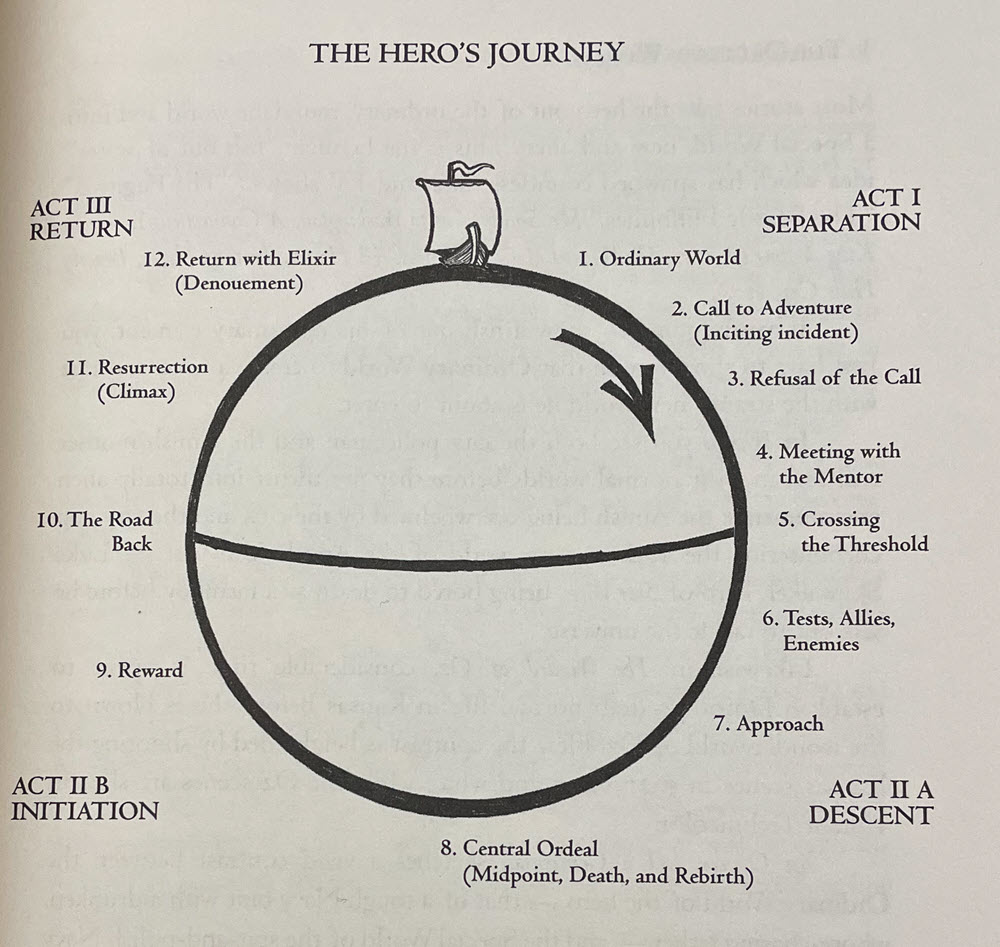
The Writer’s Journey is one of the core books in my writer’s library. Among other things, it provides a detailed discussion of the 12 parts of the Hero’s Journey. This popular story structure is found in many sci-fi, fantasy, thriller, and other stories, including cultural touchstones like Star Wars.

It also discusses 8 character archetypes, such as the hero, mentor, shadow, and shapeshifter. The book provides lots of examples of variations, so you can really understand the amazing richness of these archetypes.

I give The Writer’s Journey by Christopher Vogler 5 stars, 19 dog-ears, and 3 Post-its.

The Hero’s Journey

In my dystopian sci-fi trilogy (Project: T.A.G.), I make extensive use of the Hero’s Journey story structure. However, I don’t hesitate to mix things up. For example, my male protagonist has to face two challenges, or threshold guardians, to cross the threshold into act 2 of book 1.

Another protagonist, when faced with the call to adventure, refuses it repeatedly. Eventually, they face a refusal disaster, which is another twist on the standard formula.

The Hero’s Journey story structure from The Writer’s Journey by Christopher Vogler

Character archetypes

Every major character in my story has been assigned one of the eight archetypes: hero, mentor, threshold guardian, herald, shapeshifter, shadow, ally, or trickster. While I, of course, love my heroes, I’ve probably had the most fun writing the shapeshifters in my trilogy. 

My heroes aren’t perfect and my villains aren’t cartoon villains, but the shapeshifters are a step up in complexity. These characters aren’t just shades of grey, but actually change their colors over the course of the series. For that reason, these are the characters that will surprise readers the most.


Related posts:

Book review: ‘The Fantasy Fiction Formula’ by Deborah Chester

Book review: ‘Story’ by Robert McKee


To receive future posts for free or to become a Patron and support my dystopian sci-fi novel and get special thank-you goodies upon its publication

Tiffany Haddish: ‘Sharing is caring’

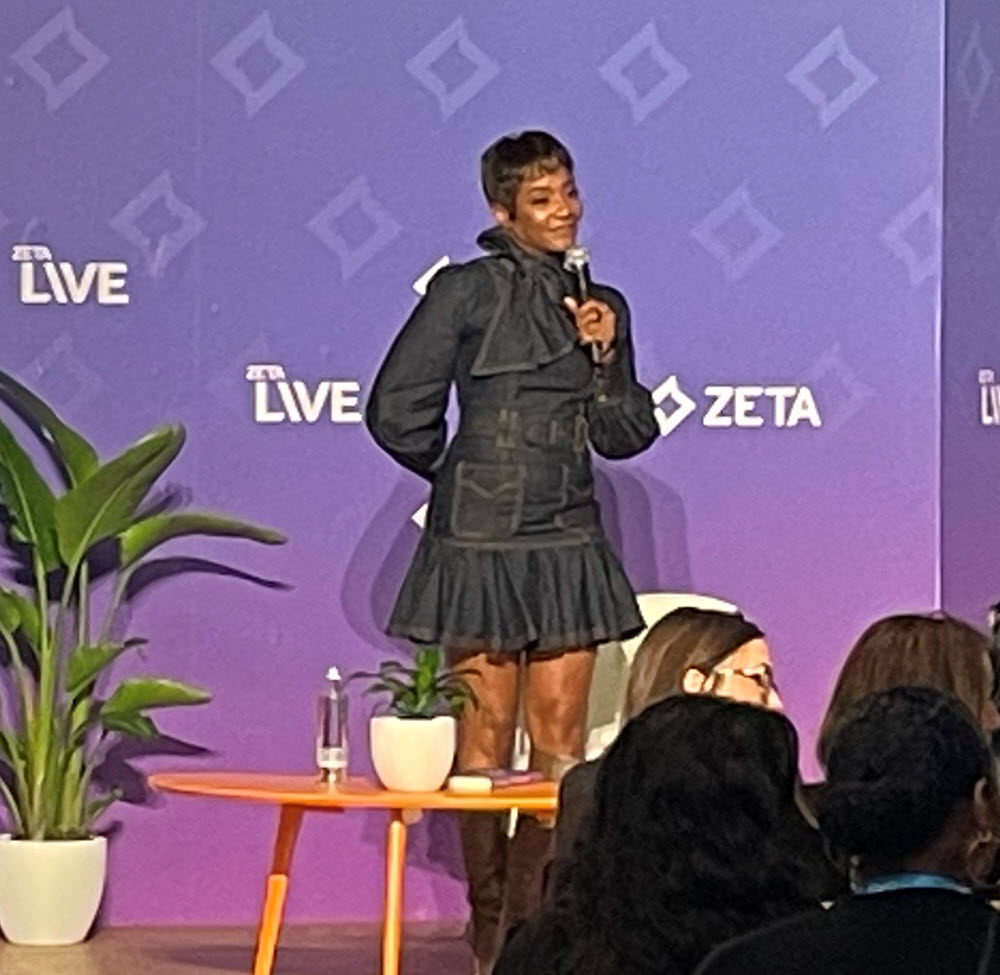
While she’s best known as a comedian, Tiffany Haddish is also the New York Times bestselling author of The Last Black Unicorn. On Thursday, I had the pleasure of hearing her talk about her latest book, I Curse You with Joy.

“When you say something on stage, they don’t always believe you. They think you’re making it up,” she said, adding that when you put it in a book, people assume what you’re saying is true.

Tiffany Haddish speaking at Zeta Live 2025 this week

Another difference between her standup work and her books is that her books give her space to tell some of her stories that aren’t funny. While she told the crowd to “find the funny” in their lives, she confessed she’s still trying to find the funny in some of the darker episodes of her upbringing as she bounced from foster home to foster home.

For example, when asked about the best gift she ever received, Tiffany Haddish said it was a suitcase she got from one of her foster parents. “I had all my clothes in garbage bags,” she said, “and I felt like garbage.”

She encouraged the audience to share their stories, even the tough ones, saying it makes people feel less alone. “Sharing is caring,” she stressed.

I couldn’t help but hear echoes of sportscaster and broadcaster Robin Roberts, who has encouraged people to “Make your mess your message.” It was that advice, in part, that led me to start writing my dystopian sci-fi trilogy, Project T.A.G., which is inspired by the loss of my daughter. Beyond a good story, I hope others can see that tragedy can be turned into something beautiful.


To receive future posts for free or to become a Patron and support my dystopian sci-fi novel and get special thank-you goodies upon its publication, subscribe on Substack →
‘Write what you know’ is too limiting

I’m not the first to say it, but this cliché advice is routinely misunderstood and used to stifle authors and put them in a box that limits their imagination to what they’ve experienced firsthand. Even worse, some writers hear that advice and put themselves in a box. Here are three much better ways to interpret this advice:

1. Write what you want to know about

When you don’t know something, you research it. For my sci-fi trilogy, Project T.A.G., I googled a lot of stuff and read tons of articles. For instance, while I’ve visited locations for another work in progress, Project W.A., I unfortunately wasn’t able to visit any of the largely international locations for Project T.A.G. So, I did some research to get a basic understanding of those places, and then imagined how they might change by the year 2104, which is when much of Book 1’s action takes place.

Military academies and bases are major settings for my story. As someone who hasn’t served in the military (much less the military of 2104), I did more research and some imaginative extrapolation to fit a post–nuclear war era where combat drones are common.

2. Write what you know emotionally

Lisa Cron shares that freeing interpretation in Wired for Story. This is the core of all the projects I’m working on now. For instance, the series arc of my work in progress Project T.A.G. is driven by a man who loses his daughter at birth. Unfortunately, I know what losing a daughter feels like. Essentially, that character is a shadow version of myself. While I was able to move on, he became bitter and blamed the world.  

3. Write what you would like to imagine knowing

Learn by doing doesn’t make any sense for sci-fi authors who write about aliens or wizards, or most historical fiction authors, or horror and thriller authors writing about sociopaths and serial killers (hopefully). 

In these instances, the world you create just has to be credible. Sometimes that entails some degree of plausibility. Other times that entails painting a vivid enough picture to create the suspension of disbelief. Every time, it requires being consistent and true to the rules you’ve created for your world.

Some people might think this third interpretation gives authors too much latitude. But I agree with While My Baby Sleeps author Natali Simmonds, who says, “Limiting yourself solely to your own life can narrow your creative possibilities. Good fiction and writing often involve imagining the experiences of others—especially those with perspectives and backgrounds different from your own.”


To receive future posts for free or to become a Patron and support my dystopian sci-fi novel and get special thank-you goodies upon its publication, subscribe on Substack →

Cutting your ‘warmup sentences’

When I was a journalist, one of the tricks I was taught was to delete the first sentence of the article I was writing. That’s because that first sentence is often a “warmup sentence.” It’s a sentence you write just to get into your story and into the flow. It’s that second sentence that’s usually much stronger and the true start of the story.

I was reminded of this while reading a post from Roselyn Teukolsky, the author of A Reluctant Spy. While attending Mystery Writers of America University, novelist Hallie Ephron advised her to “cut out the first two paragraphs of every scene” in her novel.

From Perseverance by Roselyn Teukolsky

Since novels are so much longer than articles, it makes sense that it might take extra time to get into the flow of a chapter or scene. I definitely experienced that in spades when writing chapter 1 of the first book of my dystopian sci-fi trilogy.

During the fourth revision, I cut about 1,500 words from the opening chapter, with most of that coming right off the top. That’s right, the true beginning of my novel was buried under 1,500 words of unnecessary exposition that included two characters that are never seen again.

There’s nothing wrong with writing warmup sentences—or warmup paragraphs or pages. They’re often a necessary part of the writing process. The trick is to identify them during revisions and cut them.


To receive future posts for free or to become a Patron and support my dystopian sci-fi novel and get special thank-you goodies upon its publication, subscribe on Substack →

Is it okay to use emojis in books?

Better yet: Is it wise to use emojis in books?

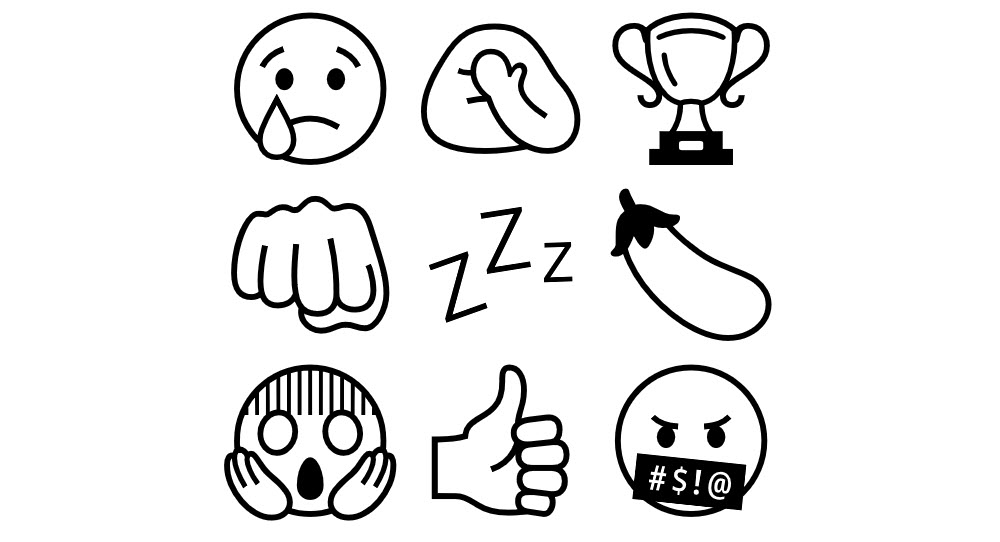
My dystopian sci-fi trilogy has an AI character that routinely uses emojis as part of its digital dialogue, and in the first book, it uses the nine emojis highlighted below. It’s one of the things that makes his dialogue unique.

But after writing it, I wondered if there were downsides to using emojis in books. After some research, here are some key issues people brought up, plus my thoughts:

  1. Books are printed in black, with few exceptions. This does make emojis less visually appealing, and perhaps less recognizable, too.
  2. The need to license an emoji font. I was initially using Segoe UI Emoji, which definitely has to be licensed. However, I found a comparable Google Font, Noto Emoji. All Google Fonts are open source, so I made the switch.
  3. Longevity and dating a book. Emojis are definitely a product of their time. That can be both good and bad. Emojis are a big part of casual modern communication, so they’d help reinforce a 2010’s and 2020’s setting. Beyond that, though, I’d argue that some emojis have well-established meanings that are likely to persist. For instance, it’s hard for me to imagine the eggplant emoji’s meaning changing at this point. It’s also difficult to imagine emojis falling out of the lexicon anytime soon, as language tends toward brevity and ease, something that’s evident with slang today.
  4. Clarity and shifting meanings. My eggplant emoji example aside, there are plenty of instances where the meaning of an emoji has changed. Also, a reader may not even be aware of the meaning of well-established emojis, especially if they’re from another culture. However, is that any different from a reader encountering a word or pop culture reference they’re unfamiliar with? As long as it’s not an overly frequent occurrence, they’ll just guess at the meaning by using context clues and move on. The same will be true for unfamiliar emojis.
  5. Audio book verbalization. If you’re doing an audio book version, this is definitely something to consider. Some emojis have cumbersome names, and that’s in addition to having to say “emoji” after each name. However, why not exercise some creative license? For instance, in the Noto Emoji font, the eggplant emoji is called “Aubergine.” But in the audio book script, I’ll just specify that it be called “eggplant emoji.” Same thing with Noto Emoji’s “Fisted Hand Sign,” which I’ll change to “fist bump emoji” in the script for greater clarity.

While those are all reasons to be thoughtful and constrained in your use of emojis, none of those are reasons to eliminate emojis from your writer’s toolbox. In the first book of my trilogy, emojis represented fewer than 20 characters out of more than 420,000 characters. That seems pretty constrained, while adding some levity and characterization.


To receive future posts or to become a Patron and support my dystopian sci-fi novel and get special thank-you goodies upon its publication, subscribe on Substack →