Confession: I don’t write everyday

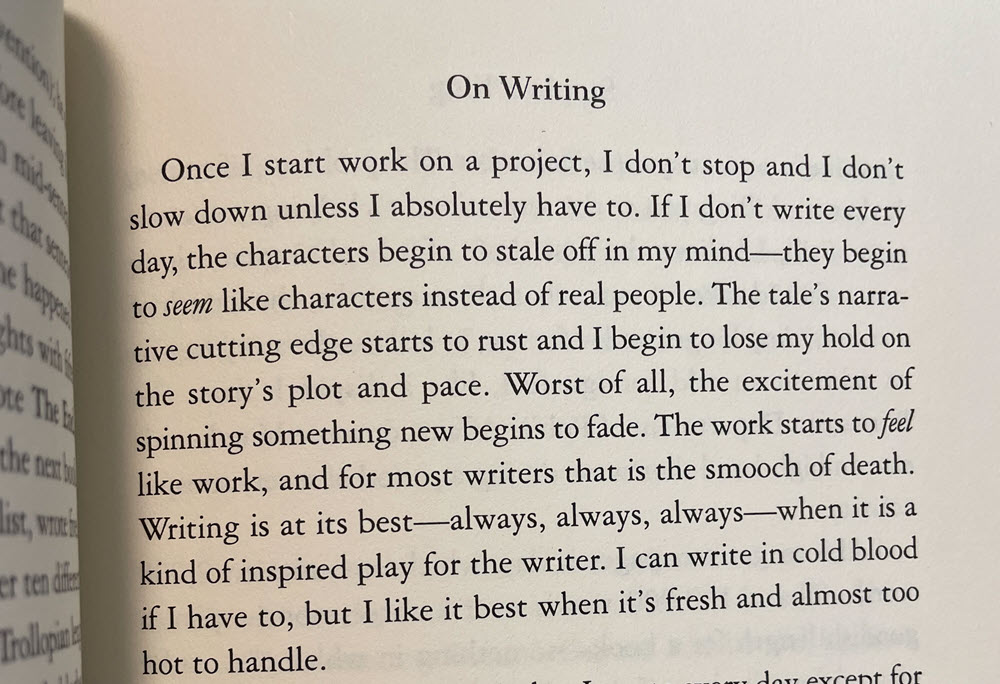
In On Writing, Stephen King says that when he starts a new novel, he writes and edits everyday to prevent the story from losing focus in his mind. I remember reading that and being incredibly discouraged, because I knew I couldn’t do that.
However, I found other ways to keep my writing momentum going, including having a deeply personal connection to my stories.
I’ve heard lots of writers talk about getting that first messy draft done quickly. Essentially, it’s an acknowledgment that editing is generally much easier than writing, so just get stuff down and then you can go back and start editing.
Even though I know that’s true from all my years as a journalist and business writer, I haven’t been able to completely embrace that in my fiction. Because the story threads are so long and there are so many narrative dominos, getting stuff down too hastily can mean re-sewing huge sections and reordering, removing, and adding lots of new dominos. For me, especially since I’m working on a trilogy, I’ve found that a more deliberative writing process works better. That means doing …
Other things besides actually writing
Some of my most productive weeks didn’t involve much manuscript writing. Instead, they involved:
Worldbuilding. Especially critical for sci-fi and fantasy authors, I’ve found that this process is very much ongoing throughout the first draft and beyond, rather than being something you completely nail down ahead of time. Invariably, this is intertwined with other non-writing activities.
Research. As I’m fleshing out my ideas and outline, or trying to decide which fork in the road to go down, I’m invariably doing research on all manner of people, places, and things.
Picking the right names. Sometimes the names of my characters come easily, and other times I really have to work for them, especially the minor characters. But names are so critical to being able to visualize a character fully, and therefore critical to being able to write them fully. I’ve spent a fair amount of time researching names, but that’s a subject for another day.
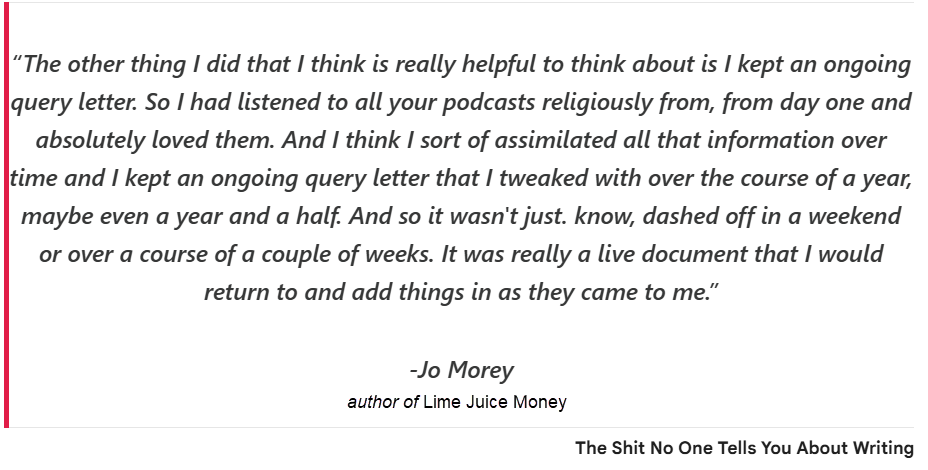
Publication planning. This may seem like a silly thing to plan while writing a novel, but working on your novel description, comps, marketing plans, and other elements as you go is easier than doing it all at the end, as Lime Juice Money author Jo Morey told The Shit No One Tells You About Writing. It can also bring clarity to your editing process.
Platform-building. In addition to writing blog and social posts, and catching up on the people I follow, I have a running list of more than 200 ideas for future posts. Among the most important are the ones that document my inspirations, which now seem vital in proving your writing is AI-free.
Keeping good notes. All of those activities involve keeping good notes. Check out what’s in my book notes.
Editing. While most folks advise you to write and then edit, I find myself doing quite a bit of editing as I go. It really helps me get back into the story and regain the flow after I’ve stepped away.
Reading about craft. Whether articles, blog posts, or books about novel-writing, publishing, or book marketing, reading the advice of others has helped me become a much better writer—whether I accept the advice or not. And even when I encounter advice I’ve heard before, it serves as a good reminder or makes me think about a principle in some new way.
That’s a lot of non-writing activities. But even so, many days I don’t do any of those things either. Ultimately, I’m doing the best I can, and not beating myself up for not living up to some mythical ideal.
Related posts:
How to generate writing momentum
What’s in my 683 pages of book notes
The two lessons I learned from the ‘Shy Girl’ fiasco
To get future posts …
