5 ways my unsuccessful query letter could have been stronger

Before handing off my updated query letter to my editor, I made significant revisions based on the errors I’d learned I’d made after querying my first 30 agents in 2024. Here are the five biggest mistakes I now know I made:
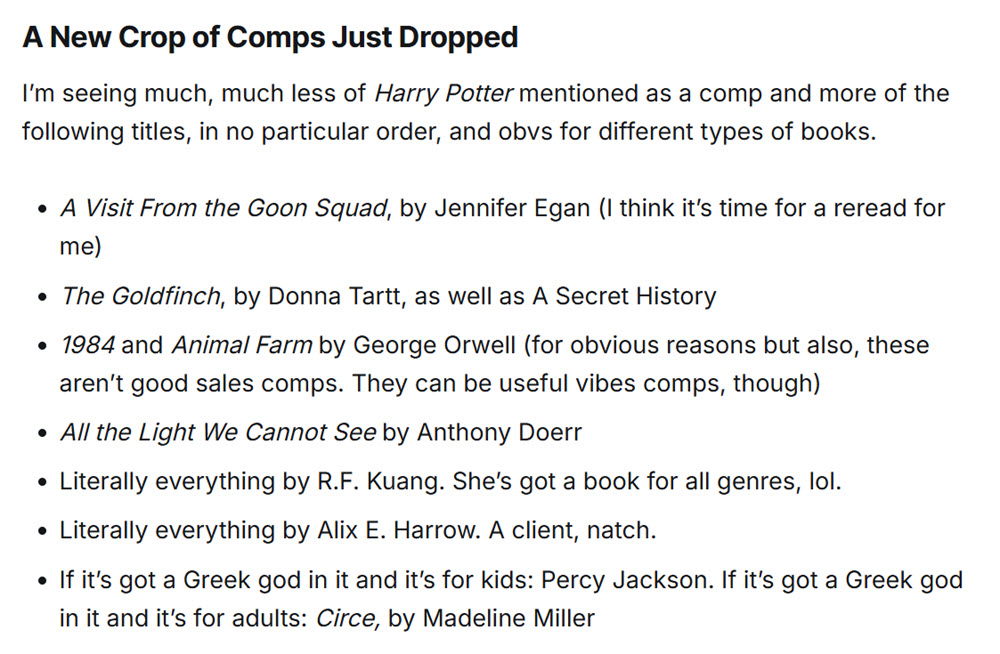
1. I picked the wrong comps.
I’d read what I thought was plenty of advice about pitching agents, but it was only after sending out my queries that I read this advice from Leigh Stein, this advice from Allison K. Williams and this advice from Lauren Kay. All of them recommend comps from the past 2 years—the past 5 years at most.
Unfortunately, the comps I stressed the most were from 2010 and 2013. [sad trombone]
Halfway through querying I started to include a longer list of comps with some more recent titles. However, only two were from the last 5 years, and none were from the last 2 years.
I felt less bad about my poor comp choices after reading Kate McKean’s Dispatches from the Slush Pile article, which highlights some of the most common bad comps used today. But I’m glad I was able to identify much more recent comps, which I’m almost done reading.
2. My summary didn’t include my protagonists’ motivations.
I included their goals, but not why they were pursuing them. Including the Why makes them much more relatable.
3. I waited to start building my fiction author platform.
Like a lot of first-time novelists apparently, I thought it would be easier to establish my author platform once I (hopefully) had an agent, which I’m sure is true. I also assumed agents would see that I built a solid nonfiction author platform and could therefore do it again.
For those reasons, I waited until after my initial batch of queries were out to launch ChadSWhite.com and my presence on Instagram and Substack. I regret waiting. I’d forgotten how long it takes to build up a positive reputation with Google and the social media algorithm gods.
4. My story question wasn’t strong enough.
My story teaser ended with a question, but it wasn’t strong. Now it expresses a clear goal for my heroes and clear stakes should they fail.
5. I didn’t say why I was the person to write this story.
Despite being over 100 words long, my initial bio didn’t explain why I wrote this story. My revised bio answers that in the first sentence: “This novel was inspired by the loss of my daughter, who I’ve reimagined as Octavia.” That’s what has allowed me to keep my writing momentum going. I made that change and then pared my bio down to 82 words.
Although technically not part of the query letter, I also didn’t format my manuscript to industry standards. We’ll call that an unofficial sixth thing that could have been better.
And now I’m waiting for my query letter editor to presumably add a few more items to my list of needed improvements. I’ll share those soon.
Related posts:
My updated query letter and synopsis are being reviewed by an editor
Query response rates and times: QueryManager and QueryTracker vs. email submissions
QueryTracker vs. ‘The Guide to Literary Agents
To get future posts …
