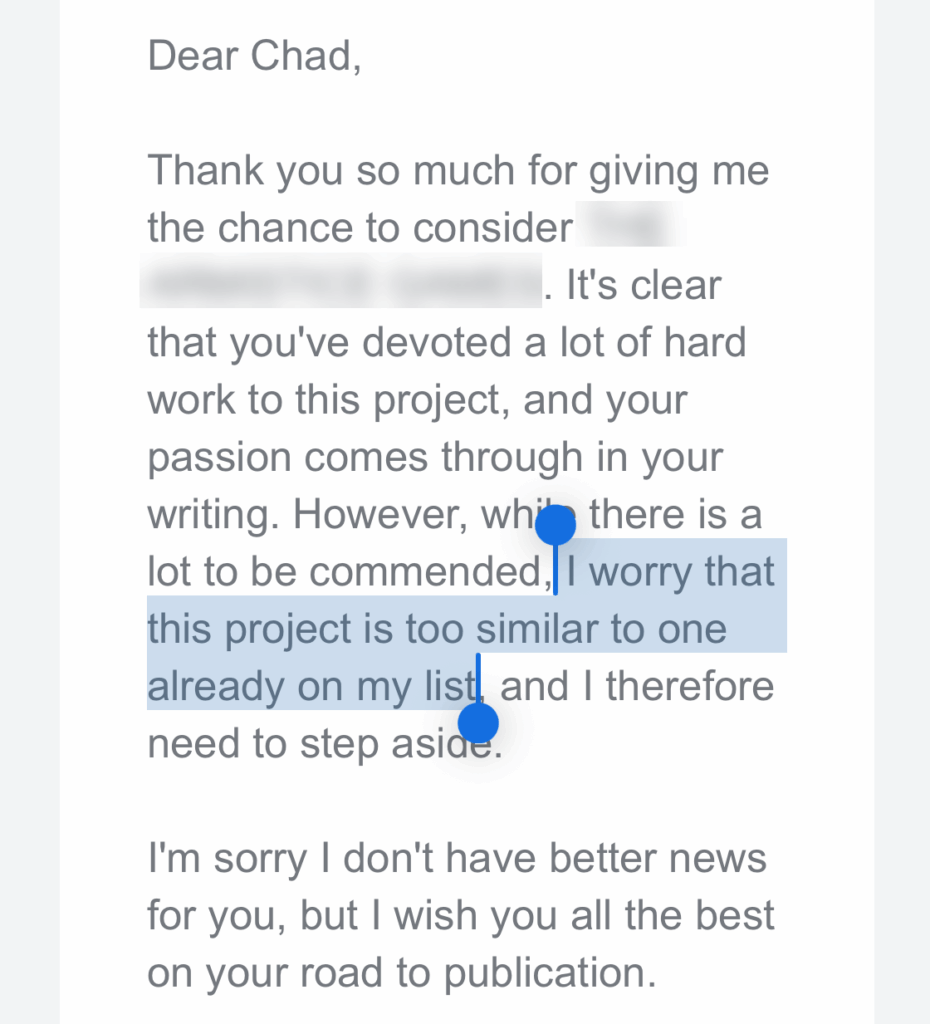
Query response: ‘This project is too similar to one already on my list’

When I first read this query response from one of the agents I reached out to, I was bummed. They already have a novel that’s similar to mine, I thought.
Then I became concerned. Oh no, they have a novel that’s similar to mine. I need to make sure mine is published first. I thought about how I might accelerate my timeline—which essentially meant abandoning querying and self-publishing.
Is being first really better?
But then I realized that publishing isn’t about being first. If anything, it’s about NOT being first. That’s why literary agents want to see successful comps—and ideally very recent comps—and most ideally lots of recent comps. They want as many reassurances as possible that they’re not going out on a limb.
There’s safety in numbers, which is to say that’s what creates established audiences. The more successful books there are that are similar to yours the better, because people seek out books that are similar to ones they’ve already read and enjoyed.
So, I’m taking a deep breath and sticking with my original plan and query more agents after I’m done working with my developmental editor. And if this other book beats mine to market, that’s all the better.
In the meantime, the fact that a major literary agent has signed a book that’s similar to mine is a form of validation. It means there’s a higher chance another agent will see the value of my novel. It’s far from a guarantee, but it’s a positive sign. At least that’s how I’ve chosen to see it.
To receive future posts for free or to become a Patron and support my dystopian sci-fi novel and get special thank-you goodies upon its publication, subscribe on Substack →
